If you’ve ever stood in a home improvement store or scrolled endlessly online, staring at bathroom vanity options with a tape measure in hand, you know the feeling. That nagging doubt: “Will this actually fit?” You discover a style you adore, but the dimensions don’t make sense. The most common question that stops a Dallas homeowner in their tracks is a simple one with a surprisingly complex answer: How deep are bathroom cabinets?
Let’s clear it up right away: The standard depth for a bathroom vanity cabinet is 21 inches. This number is the cornerstone of bathroom design for a reason—it works. But here’s the crucial part every homeowner needs to hear: 21 inches is a starting point, not a rule.
Your perfect cabinet depth depends on a unique equation of your space, your storage needs, and your vision for the room’s final look. In a historic Dallas bungalow in Lakewood, you might be wrestling with a cozy, window-lined wall. In a new-build master suite in Frisco, you could have the luxury of space but a desire for a bold, furniture-style statement piece. The “right” depth solves your specific puzzle.
This guide is your roadmap. We’ll decode the standard dimensions, explore when and why to break from them, and show you how depth impacts everything from storage to daily comfort. We’ll also tackle the practical installation hurdles, especially common in Texas homes, and how professional planning turns potential headaches into a seamless result. For a renovation that balances beauty and flawless function, understanding cabinet depth is your first, most critical step.
The Standard Dimensions Decoded: Why 21 Inches Rules
When you picture a typical bathroom vanity, you’re likely imagining the industry standard. A 21-inch deep bathroom cabinet didn’t become ubiquitous by accident; it’s the product of decades of refining form, function, and manufacturing efficiency.
This depth creates a harmonious balance in most bathrooms. It provides a sturdy base for a standard sink basin (which typically needs about 19-20 inches of front-to-back space) while leaving a comfortable lip at the front for splashes. More importantly, it offers substantial storage without making the cabinet feel like a bulky obstruction in the room. From an ergonomic standpoint, 21 inches also aligns well with the average adult’s comfortable reach, allowing you to access items at the back of a shelf without straining.
But a cabinet is a three-dimensional object. To plan effectively, you need the full picture of standard bathroom vanity dimensions:
- Depth: 21 inches (from the wall to the front of the cabinet doors).
- Height: Traditionally 31 to 32 inches. However, the trend for modern, accessible “comfort height” vanities has shifted the standard to 34 to 36 inches, which is much easier on the back.
- Width: This varies based on your sink count and available wall space.
- For a single sink: Common widths are 24″, 30″, 36″, and 48″.
- For a double sink: Standard widths start at 48″, then go to 60″, 72″, and beyond.
Think of these numbers as the most common pieces in the puzzle. They’re designed to fit together smoothly with standard plumbing layouts and fixtures, which is why they dominate showrooms and builder catalogs.
When to Go Shallow or Deep: Solving Your Space’s Unique Puzzle
Slavishly sticking to the 21-inch standard can sometimes create more problems than it solves. Your home wasn’t built from a catalog, and your cabinet shouldn’t be forced to fit like a square peg in a round hole. Knowing when to adjust the depth is the mark of a thoughtful, custom design.
The Case for Shallow Cabinets (16″ to 20″ Deep)
Sometimes, less depth is more. Shallow vanities are the unsung heroes of small-space design.
- Ideal For: Powder rooms, half-baths, Jack-and-Jill bathrooms, or any space where every inch of floor space is precious. If a door swings into the room or you need a clear pathway past the vanity, a shallower cabinet can be a game-changer.
- The Trade-off: You are sacrificing interior storage volume. A cabinet that’s 18 inches deep instead of 21 holds roughly 15% less.
- Smart Compensations: You can reclaim that storage intelligently. Consider:
- Vertical Storage: A tall, shallow medicine cabinet or a sleek wall-mounted cabinet above the toilet.
- Floating Design: Installing a shallow vanity as a “floating” wall-mounted unit opens up the floor visually, making the room feel larger.
- Smarter Interiors: Use pull-out organizers and tiered shelves to maximize every cubic inch inside.
The Case for Deep Cabinets (22″ to 24″ Deep)
On the other end of the spectrum, a deeper cabinet makes a powerful statement of luxury and utility.
- Ideal For: Spacious master bathrooms, primary suite renovations, or for anyone who views their vanity as a furniture-grade focal point. If you have the room, the extra depth provides a substantial, anchored look.
- The Benefits: This is where you gain serious advantages:
- Expansive Countertops: A deeper cabinet supports a deeper countertop, giving you glorious space for daily essentials, decorative trays, or a curated display.
- Superior Storage: You can easily store large items like towel rolls, baskets of toilet paper, or a full-sized hair dryer without jamming them in.
- Plumbing Hideaway: It more easily conceals complex plumbing, offering a cleaner look under the sink.
The Professional Insight: This is where DIY plans often meet reality. Determining the optimal depth isn’t just about measuring an empty wall. It requires understanding clearances, traffic flow, and how the cabinet interacts with every other element in the room. An experienced remodeler can perform a space analysis to tell you definitively if you have the room for a deeper vanity or if a clever, shallow solution would serve you better.
The Impact of Depth on Storage and Daily Function
Cabinet depth isn’t an abstract number; it directly dictates what you can store and how easily you can live with your bathroom every day. Let’s translate those inches into real-life usability.
What Fits Where: A Storage Guide by Depth
- In a 21″ Deep (Standard) Cabinet: This is your versatile workhorse. You can comfortably store:
- Bulkier appliances (hair dryers, curling irons).
- Cleaning supplies in caddies.
- A stack of hand towels or a few rolls of extra toilet paper.
- Pull-out trash or laundry bins.
This depth readily accommodates most standard pull-out tray organizers, making contents easy to see and reach.
- In a Shallow (<21″) Cabinet: Your storage strategy needs to be more refined. These are best for:
- Daily-use toiletries (toothpaste, skincare).
- Medications and first-aid supplies.
- Cosmetics and grooming tools.
The key is to avoid the “black hole” effect. Without organizers, small items get lost in the back. Sliding baskets, door-mounted racks, and drawer dividers are essential.
- In a Deep (>21″) Cabinet: Welcome to bulk-storage heaven. Here you can keep:
- Full-sized bath towels and washcloths.
- Large baskets holding multiple rolls of paper goods.
- Infrequently used items like extra lightbulbs, guest supplies, or backup toiletries.
Pro-Tip: For any cabinet deeper than 21 inches, insist on full-extension drawer slides. These allow drawers to pull completely out, revealing 100% of their contents. Without them, you’ll be on your knees, fishing for that item that always slides to the back.
The Accessibility Factor
Depth also has a human dimension. A 21-inch depth is generally comfortable for most adults to reach across. For families with young children, a shallower vanity drawer might be easier for them to access independently. For those planning to age in place, a shallower cabinet (often part of an accessible design) reduces reaching and bending, making the space safer and more comfortable for years to come.
Installation Considerations: The Make-or-Break Details
You’ve chosen your perfect depth. Now, will it actually work in your bathroom? This is where the rubber meets the road, and where many well-intentioned projects hit unexpected snags. The cabinet box is just one piece of a complex installation puzzle.
The Must-Check List Before You Buy or Build:
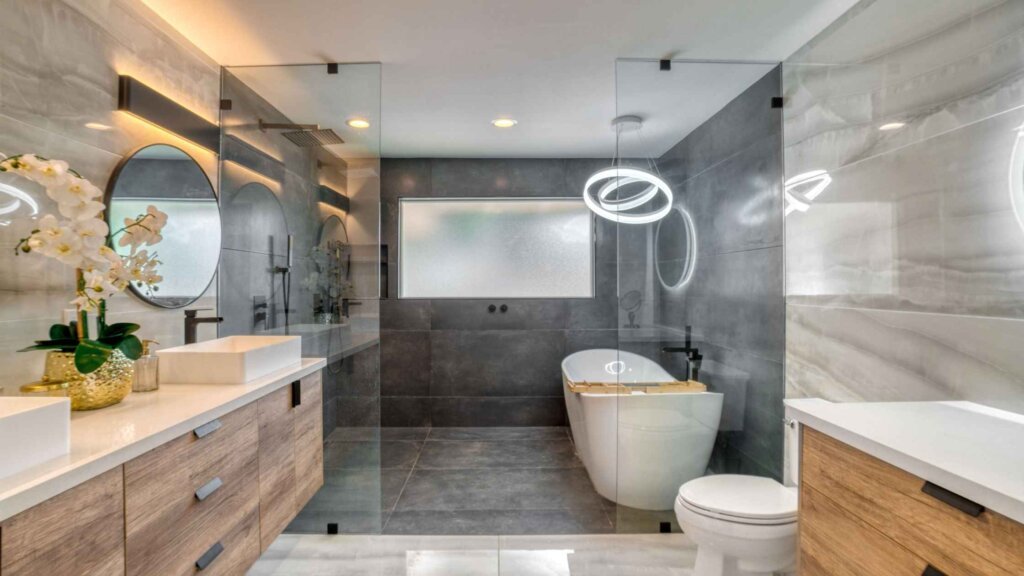
- Door and Drawer Clearance: This is the most common oversight. Open the cabinet doors and drawers on paper first. Will the door swing hit the toilet or the shower glass? Will two drawers open into each other in a corner installation? There should be a minimum of 24 inches of clear floor space in front of any fixture, and doors/drawers need room to operate fully.
- The Plumbing Wall: What’s happening behind the drywall? Your beautiful new cabinet must coexist with drain pipes (usually a 1.5-inch pipe) and water supply lines. The standard 21-inch depth typically accommodates this, but deeper cabinets or unusual plumbing in older homes can create conflicts. The toe kick (that recessed space at the bottom) is partially designed to give these pipes somewhere to go.
- Venting and Electrical: Don’t forget about the less glamorous utilities. Is there an electrical outlet on that wall that needs to remain accessible? What about the vent for your exhaust fan? Their location can dictate where, or how deep, your cabinet can be.
Why This Demands a Professional Eye
Miscalculating any of these factors doesn’t just lead to frustration—it leads to expensive change orders, delayed timelines, and compromised designs. In older Dallas homes, you might find cast-iron pipes, unexpected vents, or wiring that isn’t to modern code. A seasoned professional doesn’t just measure the wall; they anticipate the hidden hurdles.
This precise, problem-solving approach is exactly what defines a quality renovation. It’s the meticulous planning that ensures your new vanity isn’t just beautiful on day one, but functions perfectly for years. For homeowners who want certainty, partnering with a specialist like America’s General Contracting for bathroom remodeling in Dallas means these complex calculations and integrations are handled expertly, turning potential installation headaches into a smooth, seamless process.
Design Integration: Making Your Cabinet Depth a Style Statement
Your cabinet’s depth is a powerful design tool. It doesn’t just hold your sink; it sets the visual weight and feel of the entire bathroom. Choosing a depth in harmony with your style vision is the final step in mastering this decision.
The Visual Impact of Depth
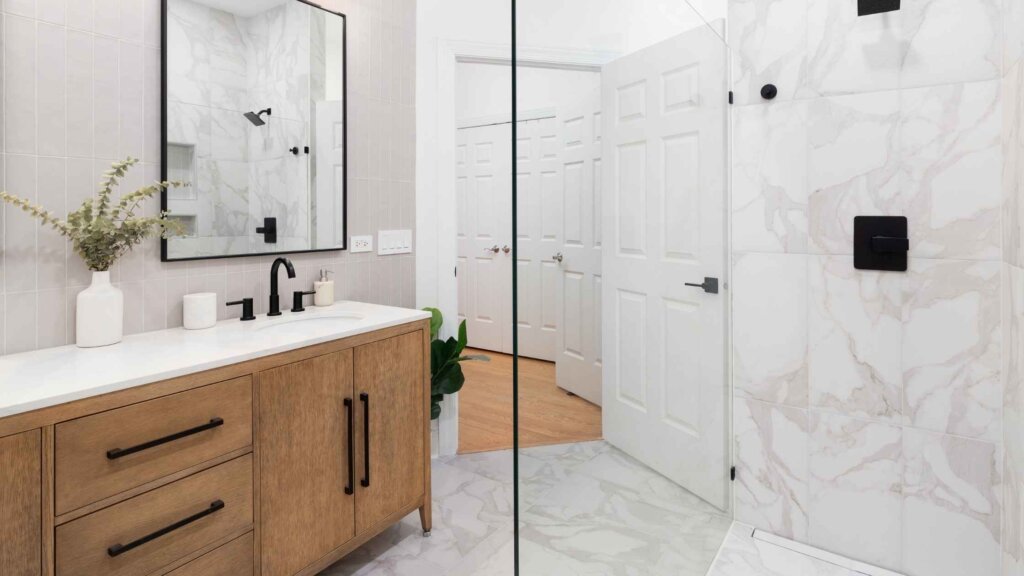
- Shallow or Floating Vanities: These are champions of the “light and airy” aesthetic. By reducing the visual bulk at floor level or lifting the cabinet off the ground entirely, they make a small bathroom feel significantly more open. This is a hallmark of modern, minimalist, and Scandinavian design styles.
- Deep, Furniture-Style Vanities: These pieces are meant to anchor the room. A 24-inch deep vanity with detailed molding, bun feet, and a rich finish feels substantial, traditional, and luxurious. It makes a confident statement in a large master bath.
The Countertop Overhang
Remember, your cabinet depth is not your final countertop depth. The countertop will typically overhang the front and sides of the cabinet by about 1 inch. This means a 21-inch deep cabinet will result in a 22-inch deep countertop. This overhang is critical for style (it creates a finished, furniture-like look) and function (it prevents water from dripping down the face of the cabinet).
Matching Depth to Your Sink Choice
Your sink is the cabinet’s partner, and they must be compatible:
- Undermount & Vessel Sinks: These are very flexible. An undermount sink is installed beneath the counter, and a vessel sits on top, so they work with a wide range of cabinet depths.
- Drop-In (Self-Rimming) Sinks: These have a visible lip that rests on the countertop. You must ensure the cabinet is deep enough to fully support the sink’s basin and its lip.
Your Bathroom Cabinet Depth Questions, Answered
Q: I love a 24-inch deep vanity. Can I make it work in my modest-sized bathroom?
A: It’s possible, but requires careful planning. You must ensure there’s still adequate walking space (at least 30-36 inches) between the vanity and any opposite wall or fixture. Using a wall-mounted faucet can save space at the back of the counter. The best practice is to create a scaled floor plan or use painter’s tape to mark the footprint on your floor to visualize the impact.
Q: What about medicine cabinets? Are they a standard depth?
A: Medicine cabinets operate on a completely different scale. They are designed to fit between standard wall studs (which are 16 inches apart, center-to-center). Therefore, their standard depth is only 3 to 7 inches. They provide perfect shallow storage for items you use daily.
Q: My old Dallas home has plumbing that sticks out strangely. What are my options?
A: This is extremely common. Solutions include:
- Choosing a shallower cabinet to clear the pipes.
- Having a custom cabinet built with a notched or recessed back to accommodate the obstruction.
- Re-routing the plumbing (a more involved but clean solution). This is a classic example of why professional assessment is so valuable.
Q: Does cabinet depth affect my choice of countertop material?
A: Indirectly, yes. A deeper cabinet provides more support for heavy natural stone slabs like granite or marble, especially if you want a dramatic overhang for a breakfast bar or seating area. For significant overhangs beyond 12 inches, additional structural support brackets are needed regardless of depth.
Conclusion: Finding Your Perfect Fit
So, how deep should your bathroom cabinets be? We began with a simple standard—21 inches—and explored the entire landscape of choice around it. The journey reveals that the optimal depth is a personal equation: it’s the measurement that fits your space’s physical limits, fulfills your storage needs, and brings your design vision to life.
The path to that perfect fit starts with honest assessment. Grab your tape measure, but also take an inventory of everything you need to store. Walk through the room’s traffic patterns. Most importantly, don’t just default to the standard; ask if a custom depth could solve a problem or create an opportunity.
For a decision this central to your bathroom’s function and beauty, expert guidance is your greatest asset. A professional doesn’t just sell you a cabinet; they provide a comprehensive solution that considers every variable, from plumbing to daily livability.
Ready to transform your Dallas bathroom with confidence? Stop wrestling with measurements and compromises. Let’s discuss your space, your needs, and your vision for a bathroom that works perfectly for you.
Contact America’s General Contracting today for a personalized consultation. Together, we’ll ensure your new cabinets are not only stunning but also impeccably sized and installed for a flawless renovation.