Granite is one of the toughest materials you can choose for your home. It’s dense, heavy, and incredibly hard. That’s why we love it for kitchens—it can take a beating and still look amazing. But when you’re standing there looking at a slab that’s just a few inches too long, that toughness becomes a problem. The idea of cutting through solid rock can feel intimidating. You might worry about cracking the stone, ruining your expensive investment, or even hurting yourself.
The good news? You don’t need to be a professional stone mason to make a clean cut. With the right preparation, the correct tools, and a bit of patience, cutting a granite countertop is something a determined DIYer can handle.
This guide will walk you through everything you need to know about how to cut granite countertop material. We will cover the essential tools, safety gear, and the exact steps to get a professional-looking edge. Whether you are trimming a slab for a new sink or resizing a remnant for a vanity, we’ve got you covered.
Table of Contents
Understanding Granite Countertops
Before you fire up any power tools, it helps to understand what you are working with. Granite is an igneous rock, formed from cooling lava deep underground. This process creates a material that is incredibly dense and hard. In fact, on the Mohs scale of mineral hardness, granite usually sits around a 6 or 7. For comparison, a diamond is a 10. This hardness is great for durability but challenging for cutting. (Source)
What Makes Granite Unique?
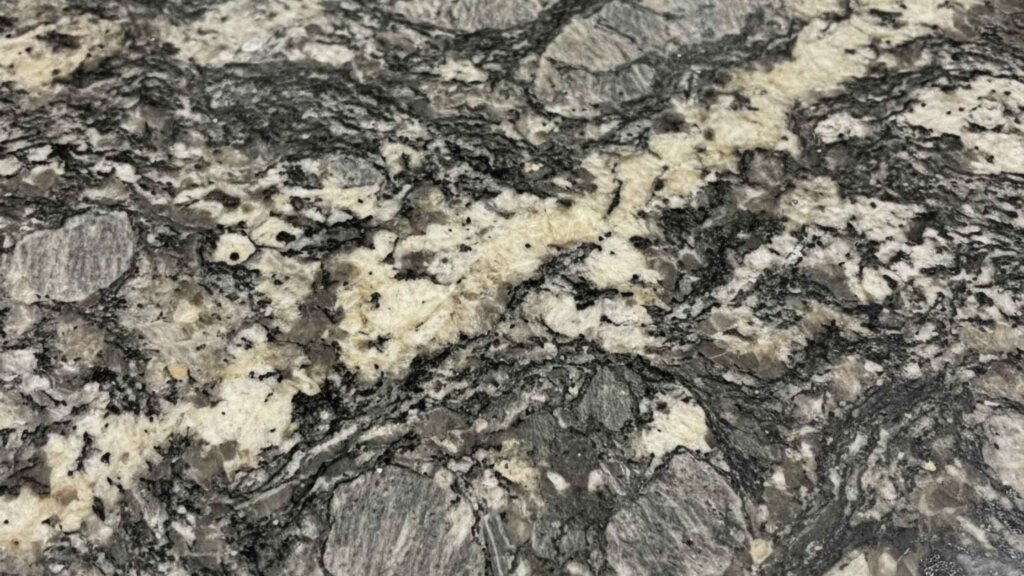
Because granite is a natural stone, it isn’t uniform like man-made quartz or laminate. It has veins, fissures, and varying densities throughout the slab. When you cut granite, you are fighting against this natural structure. If you force the cut or use the wrong blade, the vibration can cause the stone to fracture along a natural fissure, ruining your piece.
This is why preparation is key. You can’t rush stone. If you are ever unsure about handling a particularly complex cut or a massive slab, it is often safer to rely on experts. For large-scale projects, services like professional granite countertop installation can save you time and the heartbreak of a broken slab.
Essential Tools for Cutting Granite
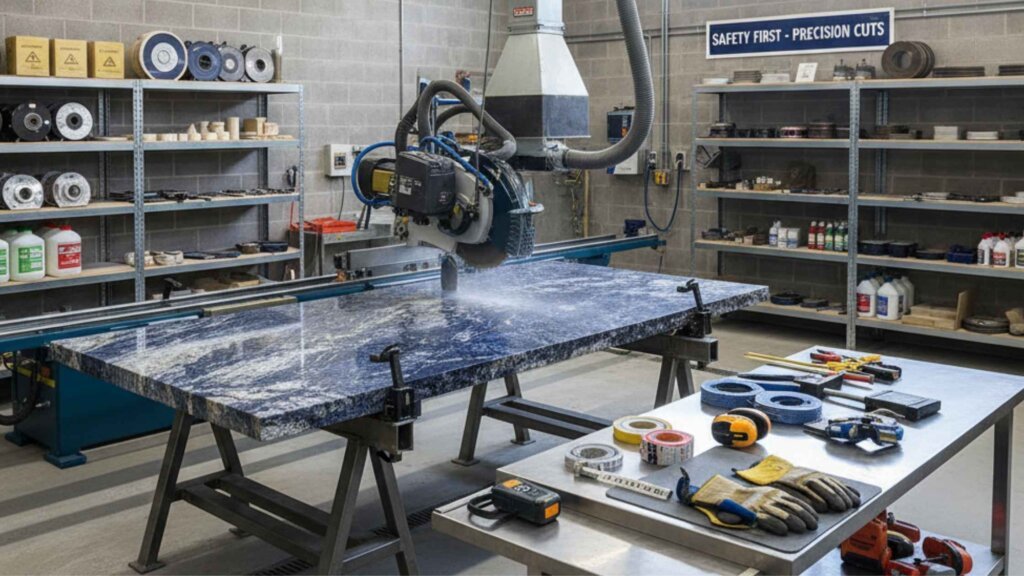
You can’t cut granite with a standard wood saw. If you try, you’ll burn out your motor and ruin your blade in seconds. To do this job right, you need specific equipment designed to grind through stone.
Must-Have Tools
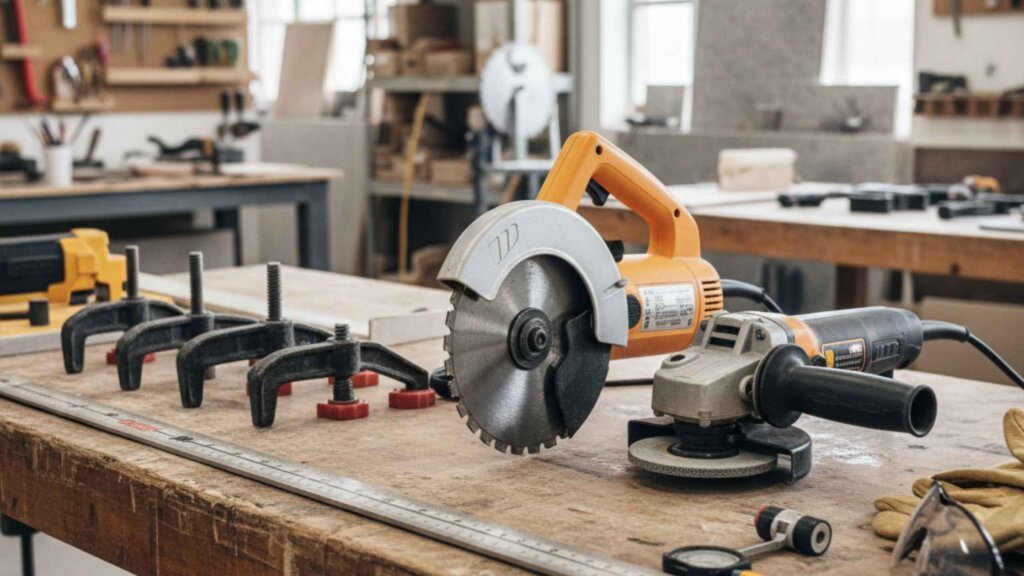
- Circular Saw or Angle Grinder: For straight cuts, a standard circular saw works well. For curves or smaller detailed cuts (like sink holes), an angle grinder is your best friend.
- Diamond Blade: This is non-negotiable. You need a continuous rim or turbo rim diamond blade designed specifically for granite or masonry. These blades don’t “cut” like a knife; they grind away the stone.
- Blue Painter’s Tape: This helps prevent chipping along the cut edge.
- Straight Edge and Clamps: You need a guide to keep your saw straight. Freehand cutting is a recipe for wavy, unprofessional edges.
- Measuring Tape and Marker: Accuracy is everything.
- Polishing Pads: Once the cut is made, the edge will be rough. You’ll need a set of diamond polishing pads to smooth it out.
Wet vs. Dry Cutting
There are two main ways to approach this: wet cutting and dry cutting.
Dry cutting is messy. It creates huge clouds of fine silica dust that gets everywhere. However, it is easier to set up because you don’t need a water source or a specialized wet saw.
Wet cutting uses a stream of water to cool the blade and suppress dust. This is the preferred method for professionals because it extends the life of the blade and keeps the stone from overheating. If you are doing a lot of cutting, consider renting a wet saw. If you are making just one or two cuts with a standard circular saw, you will likely be dry cutting (unless you have a helper carefully spraying water, which can be risky with electric tools not designed for it).
Safety First: Protecting Yourself
Cutting granite is loud, dusty, and potentially dangerous. Safety isn’t just a suggestion here; it’s a requirement.
- Lung Protection: Granite dust contains silica. Breathing this in is extremely bad for your lungs. Always wear a high-quality respirator or dust mask (N95 or better).
- Eye Protection: Chips of stone can fly off at high speeds. Wear safety goggles that seal around your eyes.
- Ear Protection: Cutting stone is deafeningly loud. Use earplugs or earmuffs.
- Vibration: The tools will vibrate heavily. Wear sturdy work gloves to maintain a good grip and protect your hands from sharp edges.
Preparing to Cut Granite
A good cut starts long before the saw turns on. Here is how to set up your workspace for success.
1. Set Up a Stable Work Area
Granite is heavy. You need a solid surface that won’t wobble. Heavy-duty sawhorses or a sturdy workbench are ideal. Because of the dust (if dry cutting) or the water runoff (if wet cutting), it is highly recommended to do this outdoors. If you must work inside, seal off the room with plastic sheeting and open windows for ventilation.
2. Measure Twice, Cut Once
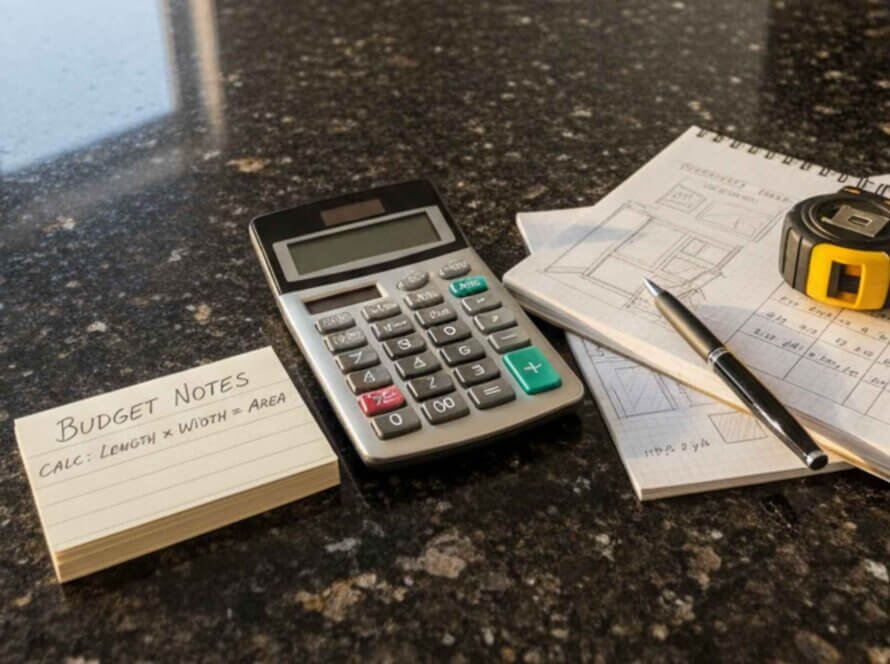
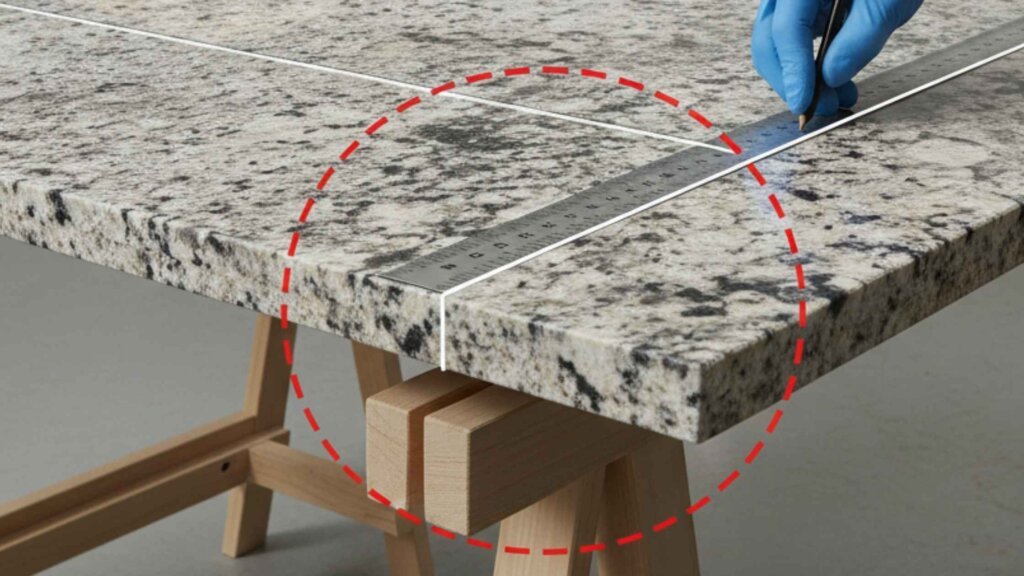
This old adage is especially true for granite. Stone is unforgiving. Measure your space carefully, then transfer those measurements to the slab. Remember to account for the width of the blade (the kerf). If you cut exactly on the line without accounting for the blade’s thickness, your piece might end up 1/8th of an inch too short.
3. Mask the Cut Line
Take your blue painter’s tape and lay a strip down exactly where you plan to cut. Why? The tape holds the surface of the granite together, reducing the chance of small chips flying off the edge as the blade exits the stone. Draw your cut line clearly on top of the tape with a marker.
4. Secure the Guide
Clamp a straight edge (like a long level or a straight piece of wood) to the granite. This will act as a fence for your circular saw to ride against. Measure the distance from the edge of your saw’s base plate to the blade, and offset your straight edge by that amount. This guarantees a perfectly straight line.
Step-by-Step Guide to Cutting Granite Countertops
Now that you are prepped and safe, it is time to make the cut. Follow these steps carefully.
Step 1: Making a Pilot Cut (Optional but Recommended)
To prevent chipping, some pros recommend making a shallow “back cut.” This involves running the saw backward (very carefully) along the end of the cut line for just an inch or two. This prevents the granite from blowing out or chipping when you finish the main cut. Note: Only attempt this if you are experienced with power tools.
Step 2: The Main Cut
Position your saw on the slab, but do not let the blade touch the stone yet. Start the saw and let it reach full speed.
Slowly push the saw into the stone. Do not force it. Let the diamond blade do the work. You are grinding, not slicing. Listen to the tool—if the motor sounds like it’s bogging down, you are pushing too hard. Keep the saw base flat against the granite to ensure a 90-degree edge.
If you are dry cutting, take breaks every minute or so to let the blade cool down. An overheated blade can warp or lose its cutting ability.
Step 3: Support the Off-Cut
As you near the end of the cut, the weight of the piece you are cutting off (the off-cut) can cause it to snap off prematurely. This can crack your main slab or fall on your foot. Have a helper hold the off-cut piece, or ensure it is supported by a table underneath so it doesn’t drop.
Step 4: Smoothing the Edge
Once the cut is done, you will notice the edge is sharp and likely has saw marks. It won’t look like the polished surface yet. This is where your angle grinder and polishing pads come in.
Start with a coarse grit pad (around 50 grit) to grind down any bumps and shape the edge. Work your way up through the grits (100, 200, 400, 800, 1500, 3000) until the shine matches the top surface. Keep the grinder moving constantly to avoid creating divots.
Cutting Holes for Sinks
Straight cuts are one thing, but what if you need a hole for a sink? This requires a slightly different approach.
- Template: Trace the sink template onto the tape on your granite.
- Corners: Drill holes in each corner of your cutout using a diamond core bit. This gives you a place to start and stop your cuts.
- Plunge Cuts: Using an angle grinder or a circular saw, carefully lower the spinning blade into the stone along your lines. You likely won’t be able to cut all the way to the corners with a circular saw because the blade is round.
- Finish the Corners: Use the angle grinder to carefully cut the remaining stone in the corners until the center piece drops out.
Common Mistakes to Avoid
Even with the best intentions, things can go wrong. Here are a few cutting granite tips to help you avoid disaster.
- Forcing the Saw: Pushing too hard causes heat buildup. Heat causes granite to expand and crack. Patience is your best tool.
- Skipping the Tape: Without tape, the vibration of the saw will chip tiny flakes off the polished surface next to your cut, leaving a ragged edge that is hard to fix.
- Ignoring Stability: If the granite vibrates while you cut, it will likely crack. Ensure the slab is fully supported on a flat surface. Clamps are mandatory, not optional.
- Using Dull Blades: A worn-out diamond blade won’t cut; it will just generate heat. If you feel like you have to push hard to get the saw to move, change the blade immediately.
When to Hire a Professional
We are big fans of DIY, but we also believe in knowing your limits. There are times when cutting granite yourself just isn’t worth the risk.
You should consider calling a professional if:
- The slab is huge: Moving and cutting a full-sized slab requires a team and specialized lifting gear.
- You need complex cuts: If you have an intricate kitchen layout with non-standard angles or multiple cutouts, the margin for error is zero.
- You lack the tools: By the time you buy a high-quality saw, diamond blades, polishing pads, and safety gear, you might be approaching the cost of hiring a pro.
- The stone is expensive: If you are working with an exotic, high-end granite, one mistake could cost you thousands of dollars.
If you decide the risk is too high, or you simply want a flawless factory finish without the dust and noise, it’s smart to bring in experts. Teams like America’s General Contractor specialize in precision stone work. We handle the heavy lifting, the dusty cutting, and the fine polishing so you don’t have to. You can check out our service page to see how we can help with your renovation.
Frequently Asked Questions
Can I cut granite with a regular tile saw?
Maybe. Small tile saws might handle thin granite tiles, but they usually lack the power and depth to cut thick 3cm countertop slabs. You risk burning out the motor.
How do I fix chips on the cut edge?
If you get small chips despite using tape, don’t panic. The polishing process usually removes them. If a chip is deep, you can fill it with a mixture of granite dust and epoxy before polishing.
Is granite dust dangerous?
Yes. It contains crystalline silica, which causes silicosis, a serious lung disease. Never dry cut indoors without heavy-duty ventilation and a proper respirator.
Conclusion
Learning how to cut granite countertop material is a serious undertaking, but it is achievable. It requires a steady hand, the right diamond-tipped tools, and a healthy respect for the material. By following these steps—measuring accurately, taping your lines, and letting the saw do the work—you can achieve a custom fit for your kitchen or bathroom project.
However, remodeling should be exciting, not stressful. If the thought of handling heavy power tools around expensive stone makes you nervous, there is no shame in asking for help. Your home deserves a perfect finish.
Ready to transform your kitchen without the hassle? Visit America’s General Contractor today. Whether you need a simple installation or a full luxury remodel, our team brings the expertise and precision your home deserves. Let’s build something beautiful together.