Planning a kitchen or bathroom renovation is an exciting process. You get to dream about new cabinet colors, modern fixtures, and beautiful new countertops. But before you can get to the fun part of picking out a stunning slab of granite or quartz, you need to handle a crucial first step: the budget. And to create an accurate budget, you need to know exactly how much material you will need.
This is where many homeowners get stuck. Countertop materials are almost always priced by the square foot, so figuring out this measurement is essential. Getting it wrong can lead to costly mistakes, like ordering too much material or, even worse, not enough.
This guide will demystify the process and show you exactly how to calculate the square footage of your countertops. We will provide a simple formula, a step-by-step process, and tips for handling tricky L-shaped layouts or cutouts. By the end, you will be able to measure your countertops with confidence, ensuring your renovation project starts on the right foot.
Why Knowing Your Countertop’s Square Footage Matters
It might seem like a small detail, but knowing the precise square footage of your countertops is incredibly important. This single number impacts your entire project, from your initial budget to the final installation.
Here’s why taking the time to measure accurately is a step you can’t afford to skip:
- Accurate Budgeting: Countertop materials can range from affordable laminates to high-end marble. Knowing your exact square footage allows you to compare the costs of different materials realistically. You can determine whether that beautiful quartz you have been eyeing fits within your budget.
- Getting Reliable Quotes: When you contact contractors for quotes, the first thing they will ask for is the square footage. Providing an accurate number ensures the estimates you receive are dependable, preventing surprise costs later on.
- Avoiding Material Waste: Ordering too much material means you have spent money on something you won’t use. While having a little extra is sometimes wise for future repairs, significant overages are just a waste of your budget. On the other hand, under-ordering can cause major delays and potential color-matching issues if you need to order more from a different batch.
Ultimately, accurate measurements save you time, money, and stress. If you live in the Dallas area and want to guarantee precision, our team at America’s General Contractor offers professional measurement services to get your project started flawlessly.
Tools You’ll Need for Measuring Countertops
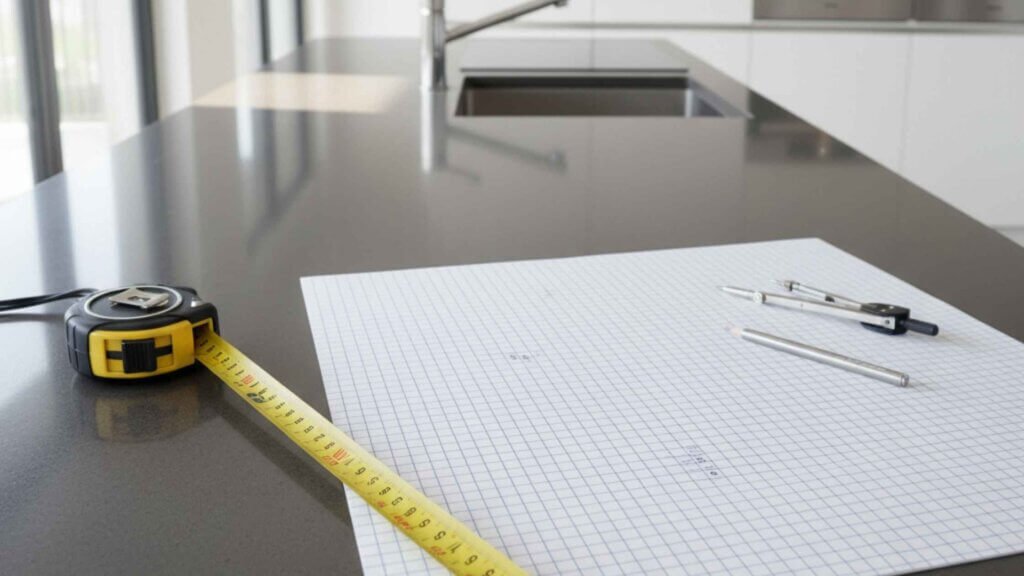
You don’t need a contractor’s full toolkit to measure your countertops. You probably already have most of the necessary items at home. Before you begin, gather these essential tools to make the job quick and easy.
Essential Tools for the Job
- Measuring Tape: A reliable, retractable measuring tape is your most important tool. Make sure it’s long enough to cover the longest section of your counter in one go.
- Graph Paper and Pencil: Don’t underestimate the power of a simple sketch. Drawing your countertop layout on graph paper helps you visualize the space, break it into manageable sections, and keep your measurements organized.
- Calculator: While the math is simple, a calculator helps avoid errors when you multiply dimensions and add up your totals. Your smartphone’s calculator will work just fine.
- Straight Edge or Ruler: A ruler can help you draw clean lines on your graph paper and ensure your measurements on the countertop itself are straight, especially along edges.
For a more detailed look at the tools professionals use, you can check out resources like Arch City Granite’s guide on the topic.
The Formula for Calculating Square Footage
The math involved in calculating countertop square footage is surprisingly simple. The core of the process is converting your measurements, which you will take in inches, into square feet.
The Basic Formula
Here is the only formula you need to remember:
(Length in inches × Width in inches) ÷ 144 = Square Feet
Why divide by 144? Because there are 12 inches in a foot, a square foot is 12 inches by 12 inches. So, 12 × 12 = 144 square inches in one square foot. Dividing your total square inches by 144 gives you the final number in square feet.
A Quick Example
Let’s say you have a straight section of countertop on a kitchen island.
- You measure the length and get 72 inches.
- You measure the width (or depth) and get 36 inches.
Here is how you would apply the formula:
- Multiply Length by Width: 72 inches × 36 inches = 2,592 square inches
- Divide by 144: 2,592 ÷ 144 = 18 square feet
That kitchen island has a surface area of 18 square feet. It’s that easy. For more examples and even an online calculator, you can visit Great Lakes GM’s estimation guide.
How to Measure Countertops for Square Footage: A Step-by-Step Process
Now that you have your tools and the formula, it’s time to start measuring. For the most accurate results, break down your countertops into simple rectangular or square sections. If you have an L-shaped or U-shaped kitchen, treat each “arm” of the layout as a separate piece.
Step 1: Sketch Your Countertop Layout
On your graph paper, draw a bird’s-eye view of your kitchen or bathroom countertops. Don’t worry about making it perfect—this is just a map to keep your numbers organized. Label each rectangular section with a letter (A, B, C, etc.).
Step 2: Measure Each Section
Using your measuring tape, measure the length and width of Section A in inches. Write these two numbers down on your sketch next to the corresponding section. Repeat this process for every section (B, C, and so on) until you have dimensions for your entire countertop area.
Important: Always measure to the nearest 1/8th of an inch for better accuracy.
Step 3: Calculate the Square Inches for Each Section
Now, use your calculator to find the square inches for each individual section.
- For Section A, multiply its length by its width.
- For Section B, multiply its length by its width.
- Continue this for all sections.
Step 4: Convert to Square Feet
Take the total square inches you just calculated for Section A and divide it by 144. This gives you the square footage for that piece. Write this number down. Repeat this for all other sections.
Step 5: Add It All Up
Finally, add the square footage of all your sections together. This grand total is the total square footage of your countertops.
Example Calculation for a Kitchen
Let’s say your kitchen has two main sections:
- Section A (main counter): 96 inches long × 25 inches wide
- Section B (island): 60 inches long × 30 inches wide
Calculation:
- Section A: (96 × 25) ÷ 144 = 16.67 square feet
- Section B: (60 × 30) ÷ 144 = 12.5 square feet
- Total: 16.67 + 12.5 = 29.17 square feet
You would need approximately 30 square feet of material for this kitchen. For complex layouts, it’s always better to be precise. If you need help, our professional countertop measurement services at America’s General Contractor are here to ensure you get it right.
Measuring Irregular or L-Shaped Countertops
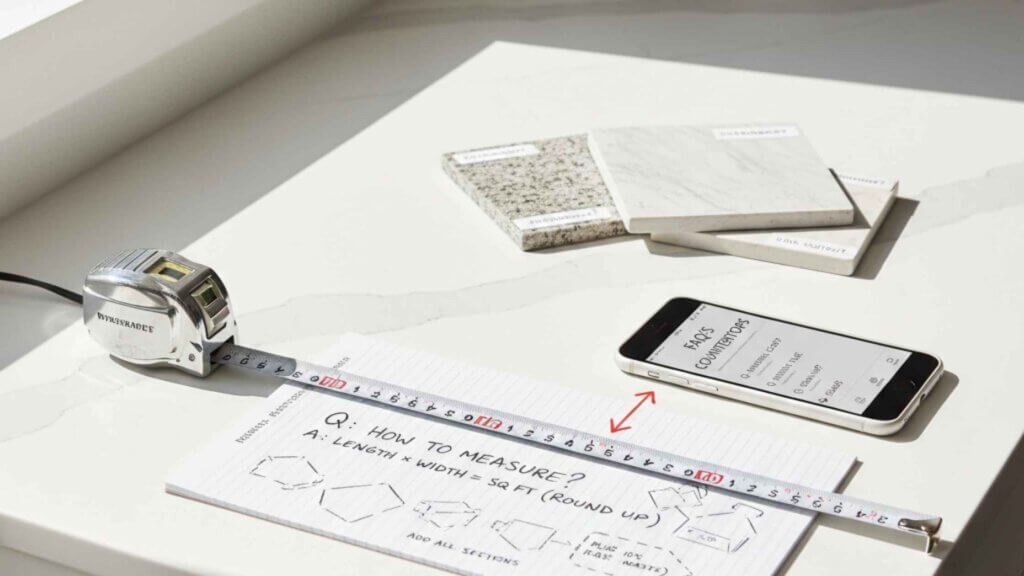
Most kitchens are not made of simple rectangles. L-shaped and U-shaped countertops are very common, but they can make measurements seem complicated. The trick is to continue breaking them down into simple squares or rectangles.
Imagine your L-shaped counter. You can split it into two rectangles in two different ways. It does not matter which way you choose; the total area will be the same.
Example for an L-Shaped Countertop
Let’s say one arm of the L is 80 inches long and the other is 60 inches long. Both are a standard 25 inches wide.
- Divide into two rectangles. Draw a line on your sketch to separate the L-shape into two distinct rectangles. Let’s call them Rectangle 1 and Rectangle 2.
- Measure Rectangle 1. This will be the full length of one arm. Let’s say it’s 80 inches long by 25 inches wide.
- Measure Rectangle 2. This will be the remaining part. Be careful not to measure the corner twice! If the second arm is 60 inches long, you need to subtract the width of the first countertop (25 inches). So, this rectangle is (60 – 25) = 35 inches long by 25 inches wide.
- Calculate the square footage for each:
- Rectangle 1: (80 × 25) ÷ 144 = 13.89 sq. ft.
- Rectangle 2: (35 × 25) ÷ 144 = 6.08 sq. ft.
- Add them together: 13.89 + 6.08 = 19.97 square feet.
This method works for any irregular shape. Just keep dividing the area into simple rectangles until you have measured the whole surface. For more visual examples, guides like RONA’s measurement PDF can be very helpful.
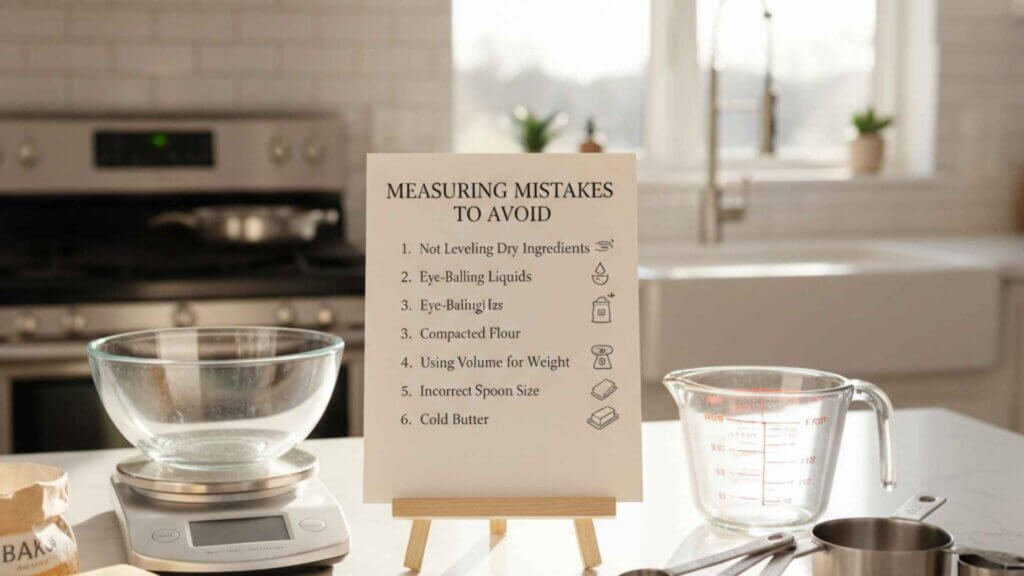
Common Mistakes to Avoid When Measuring Countertops
A small error in measurement can lead to a big headache. Be mindful of these common mistakes to ensure your calculations are accurate from the start.
- Forgetting Overhangs: Most countertops hang over the edge of the cabinets by about 1 to 1.5 inches. Make sure your width measurement includes this overhang for an accurate material estimate.
- Ignoring the Backsplash: If you plan to install a matching backsplash, you need to measure and calculate its square footage separately, then add it to your countertop total. The height of a standard backsplash is typically 4 inches.
- Double-Measuring Corners: In an L-shaped or U-shaped kitchen, it’s easy to accidentally measure the corner area twice. Always divide the space into non-overlapping rectangles.
- Not Accounting for Cutouts: While you measure the total surface area initially (including the sink and cooktop areas), make a note of these cutouts. Your contractor will need to know about them, but for the initial material estimate, you typically buy the whole slab.
When in doubt, always double-check your measurements. Measure twice, cut once is a motto that definitely applies here. For peace of mind on complex projects, consider calling in the experts at America’s General Contractor for a professional consultation.
Your Questions About Measuring Countertops Answered
Here are answers to a few frequently asked questions about calculating countertop square footage.
What is the standard depth of a kitchen countertop?
The standard depth for a kitchen countertop is 25.5 inches. This allows it to cover the standard 24-inch-deep base cabinets with a 1.5-inch overhang.
How do I measure for a kitchen island with rounded corners?
For rounded corners, you can approximate by measuring it as a rectangle. The small amount of material cut off is usually minimal. For a more precise calculation, you can treat the rounded part as a quarter-circle, but for most budget estimates, a simple rectangle is sufficient.
Should I round my measurements up or down?
It’s generally best to be as precise as possible. Don’t round your initial measurements in inches. Once you have the final total square footage, it is a good practice to round up to the next whole number to ensure you have enough material.
Do I subtract the area for my sink or cooktop?
For your initial material estimate, no. You must purchase the entire rectangular slab of material, and the fabricator will cut out the holes for the sink and cooktop. You are paying for the material in the cutout, even though it will be removed.
Conclusion
Calculating the square footage of your countertops is a vital skill for any homeowner planning a renovation. By breaking down the task into simple steps—sketching your layout, measuring each section, and using the basic formula—you can create an accurate estimate for your project. This will empower you to set a realistic budget, get reliable quotes from contractors, and move forward with your renovation with confidence.
While DIY measurement is achievable for many, some kitchens have complex angles and unique features that make it challenging. If you feel unsure or simply want a professional guarantee of accuracy, help is available.
Ready to start your countertop project with confidence?
Visit America’s General Contractor to learn more about our professional countertop installation and measurement services in Dallas and across Texas. We will ensure your project starts smoothly, with precise measurements and expert guidance every step of the way.