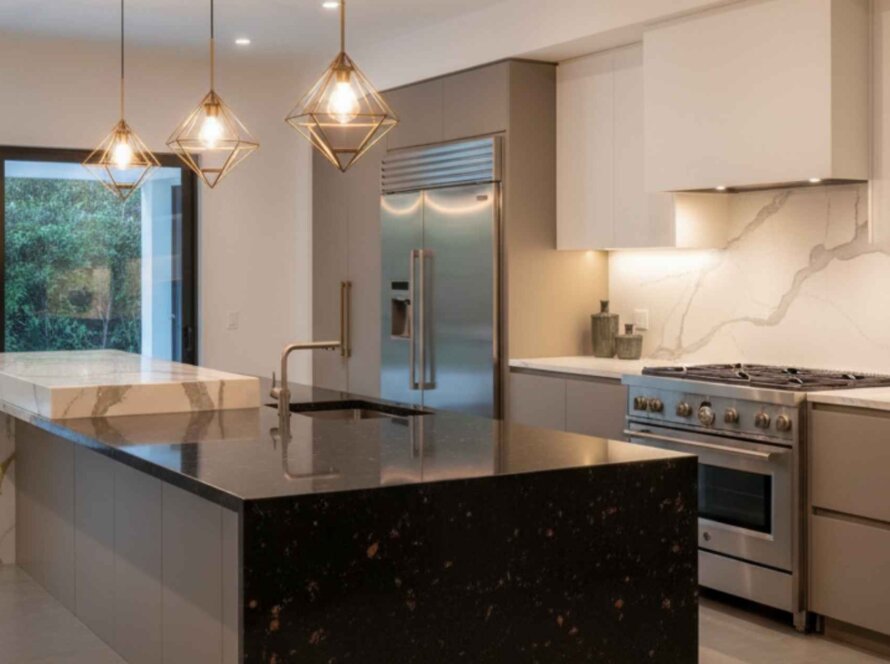
Have you ever walked into a kitchen and felt like something was just… off? Maybe you found yourself hunching over to chop vegetables, or perhaps you had to stand on your tiptoes just to knead dough. It’s not something we think about often, but the height of your countertop plays a huge role in how comfortable your kitchen or bathroom feels.
Whether you are planning a full remodel or just replacing an old vanity, getting the height right is crucial. It affects everything from your posture to the visual flow of the room. But what exactly is the “right” height? Is there a magic number that works for everyone, or should you customize it to fit your family?
In this guide, we will dive deep into everything you need to know about countertop heights. We will explore the industry standards for kitchens and bathrooms, discuss why these measurements exist, and show you how to customize them for your specific needs. By the end, you’ll have all the information you need to create a space that fits you perfectly.
What Is the Standard Countertop Height?
When you buy a home or order cabinets, you usually get a standard height. This standardization makes it easier to install appliances like dishwashers and ranges, which are built to fit under or alongside these counters. However, standards can vary slightly depending on the room.
Kitchen Countertops
For kitchens, the magic number is 36 inches. This measurement is taken from the finished floor to the top surface of the countertop.
Here is how that number is calculated:
- Base Cabinet Height: Standard base cabinets are typically 34.5 inches tall.
- Countertop Thickness: Most countertops are about 1.5 inches thick.
When you add those together, you get a total of 36 inches. This height is designed to be ergonomic for the average person, allowing you to prep food, cook, and clean without straining your back or shoulders.
Bathroom Countertops
Bathrooms are a different story. Historically, bathroom vanities were lower, often sitting at 30 to 32 inches high. The logic was that these counters were used by children as well as adults, so a lower height made the sink more accessible for everyone.
However, trends are changing. Many modern homes now use “comfort height” vanities, which match the kitchen standard of 36 inches. This taller height is easier on the backs of adults, as you don’t have to bend down as far to wash your face or brush your teeth.
Bar and Island Countertops
If you have a kitchen island with seating, you might encounter a different height.
- Bar Height: Raised breakfast bars are typically 42 inches high. This height is perfect for standing with a drink or sitting on a standard 30-inch bar stool.
- Table Height: Some islands incorporate a lower section for dining, usually around 28 to 30 inches high, meant for use with regular chairs.
Why Is Countertop Height Important?
You might be thinking, “It’s just a few inches, does it really matter?” The short answer is: yes. The height of your work surface impacts your physical health and the overall functionality of your home.
Ergonomics and Comfort
Ergonomics is the science of designing things to fit the people who use them. If a counter is too low, you have to bend your spine to work, which leads to lower back pain over time. If it’s too high, you have to raise your shoulders or elbows awkwardly, which can cause tension in your neck and arms.
The ideal work height is generally 3 to 4 inches below your bent elbow. Since the average height generally works well with the 36-inch standard, it covers most people. But if you fall outside the average height range, standard counters might be a literal pain.
Accessibility
For households with specific needs, standard heights might not work at all.
- Wheelchair Users: A standard 36-inch counter is often too high. Lowering a section of the countertop to 28-34 inches and ensuring there is open space underneath for knees is essential for accessibility.
- Children: While step stools are a common fix, families with young children often appreciate lower bathroom vanities or dedicated lower prep stations in the kitchen.
Aesthetic Balance
Beyond comfort, height affects the look of a room. A taller vanity can make a bathroom feel more luxurious and substantial. In an open-concept kitchen, the height of your island can help define the space, separating the cooking zone from the living area.
At America’s General Contractor, we understand that form and function must go hand in hand. We help homeowners find that perfect balance where the design looks beautiful and feels effortless to use.
Customizing Countertop Heights
One size does not fit all. If you are building a custom home or doing a major renovation, you have the freedom to break the rules. Customizing your countertop height can transform your cooking experience.
Adjusting for Tall or Short Users
If you are significantly taller or shorter than average, sticking to the standard 36 inches might not make sense.
- For Taller People (6’0″ and up): Consider raising your countertops to 38 or even 39 inches. You can achieve this by adding a taller kick plate under the cabinets or building up the countertop thickness.
- For Shorter People (5’4″ and under): A height of 34 or 35 inches might be more comfortable. However, be careful going too low in the kitchen, as standard appliances like dishwashers may no longer fit underneath.
Task-Specific Heights
Professional kitchens often use varied heights for different tasks, and you can adopt this strategy at home.
- Baking Station: Kneading dough and rolling out pastry requires downward force. A lower counter height of 30 to 32 inches allows you to lean into the work using your body weight, rather than just your arm strength.
- Chopping Station: Detailed knife work is safer and easier if the surface is slightly higher, bringing the food closer to your eyes and reducing the need to hunch.
Multi-Level Islands
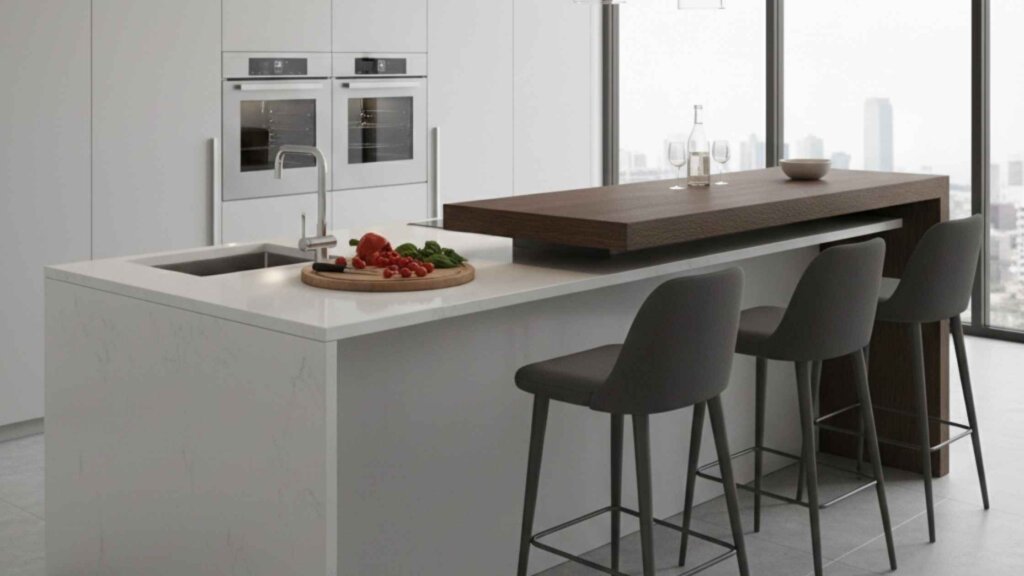
A popular modern solution is the multi-level island. This design incorporates different heights into a single unit. For example, the main prep area might be at 36 inches, while a raised bar section sits at 42 inches to hide dirty dishes from view. Conversely, a dropped section at table height can serve as a cozy breakfast nook.
For more insights on ergonomic design, resources like Natural Stone City offer great breakdowns of optimal heights.
Countertop Heights for Different Spaces
While the kitchen gets all the attention, other areas of your home rely on proper countertop placement too.
Laundry Rooms
In a laundry room, the countertop usually sits over appliances. Front-loading washers and dryers are typically taller than kitchen cabinets. If you plan to install a counter directly over them for folding clothes, expect a height of around 39 to 42 inches. This is actually a great height for folding laundry while standing up!
Outdoor Kitchens
Outdoor countertops often follow the standard 36-inch rule, but there is more flexibility here. Since outdoor kitchens often house grills, pizza ovens, and beverage coolers, the counter height usually dictates—or is dictated by—these appliances.
- Grill Height: The cooking surface of a grill should be level with your kitchen stove, but the physical grill unit often sits into the cabinet. This might require a lower shelf or a specific cutout.
- Bar Seating: Outdoor bars are fantastic for entertaining. A 42-inch height keeps guests comfortable while keeping them safely away from the hot grill.
Home Offices
Built-in desks with stone or laminate tops are becoming common. Unlike a kitchen counter, a desk needs to be sitting height. The standard desk height is 28 to 30 inches. Installing a desk at kitchen counter height (36 inches) will require a drafting chair or stool, not a regular office chair.
Common Mistakes to Avoid When Choosing Countertop Height
Renovating is expensive, and changing a countertop height after installation is nearly impossible without tearing everything out. Here are some pitfalls to watch out for.
1. Forgetting the Floor
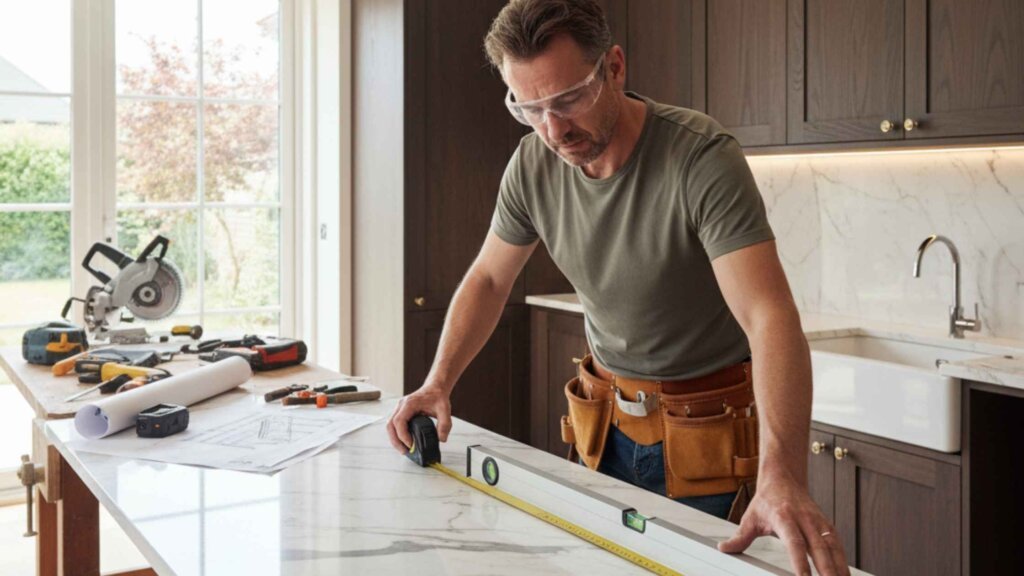
This is the most common error. Remember, countertop height is measured from the finished floor.
- If you install cabinets on the subfloor and then add thick tile or hardwood flooring, you effectively shorten your cabinets.
- Always account for the thickness of your new flooring when calculating the final height. If you are adding ¾-inch hardwood, you may need to shim your cabinets up so they don’t end up too low.
2. Ignoring Appliances
Standard appliances are built for standard openings.
- Dishwashers: A standard dishwasher needs a clearance of roughly 34 inches. If you lower your countertops to 33 inches for comfort, your dishwasher simply won’t fit. You may need to buy specialized ADA-compliant appliances, which can be more expensive and smaller.
- Slide-in Ranges: These have a lip that hangs over the countertop. If your counters are too high or too low, the range won’t sit flush, creating gaps where food can fall.
3. Overlooking Resale Value
Customizing your home is great, but extreme customization can hurt resale value. Ideally, you want your home to appeal to the widest range of buyers.
- If you are 6’5″ and install 40-inch counters everywhere, a potential buyer who is 5’2″ might walk away because the kitchen is unusable for them.
- If you need extreme heights, consider achieving it through furniture or temporary islands rather than permanent cabinetry.
For a deeper dive into installation pitfalls, Dura Supreme has excellent advice on heights and overhangs.
FAQs About Countertop Heights
Q: Can I change the height of my existing countertops?
A: Not easily. Countertops are glued to the cabinets, and cabinets are screwed into the wall. Changing the height usually means removing the countertop (which often breaks it) and detaching the cabinets to add or remove shims. It is essentially a full remodel.
Q: What is the best height for a bathroom vessel sink?
A: Vessel sinks sit on top of the counter rather than inside it. If you put a 6-inch tall vessel sink on a standard 36-inch vanity, the rim of the sink will be at 42 inches—way too high for most people. For vessel sinks, you should lower the vanity cabinet to about 30 inches so the top of the sink ends up at a comfortable height.
Q: How high should a kitchen island be if I want to sit at it?
A: It depends on your chairs.
- For bar stools (30-inch seat height), the counter needs to be 42 inches.
- For counter stools (24-inch seat height), the counter needs to be 36 inches.
Make sure you buy the right chairs for your counter! A mismatch here is uncomfortable for everyone.
Q: Is “comfort height” the new standard for bathrooms?
A: Yes, it is becoming the default in new construction. It refers to a vanity that is 36 inches tall, matching the kitchen. Most adults prefer it because it requires less bending. However, standard 32-inch vanities are still widely available and used, especially in children’s bathrooms.
Conclusion
The question “how high is a countertop” seems simple, but the answer depends on who is using it and what they are doing. While 36 inches remains the gold standard for kitchens and modern bathrooms, you shouldn’t feel trapped by that number. Your home should serve you, not the other way around.
Whether you need a lower baking station, an accessible workspace, or a taller vanity to save your back, getting the height right is the key to a functional home. It requires careful planning, accurate measuring, and a clear understanding of how you live.
If you are planning a remodel and want to ensure every inch is perfect, don’t leave it to chance. At America’s General Contractor, we specialize in custom kitchen and bathroom installations that blend industry standards with your personal needs. We can help you navigate the tricky decisions about appliance clearances, flooring adjustments, and ergonomic design.
Your dream kitchen is within reach—and it should be at the perfect height. Visit our website today to learn more about our services and schedule a consultation. Let’s build a space that fits you perfectly.