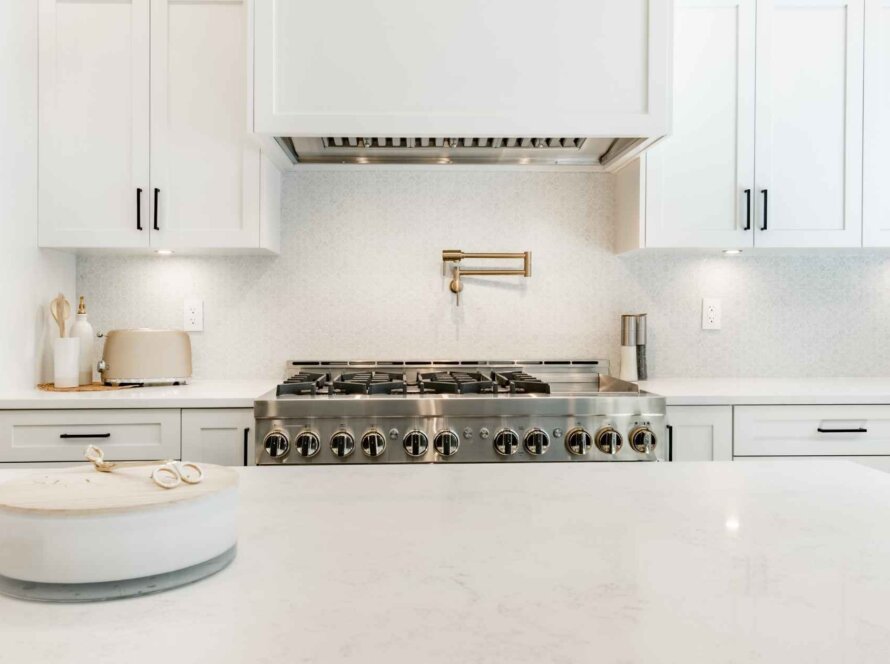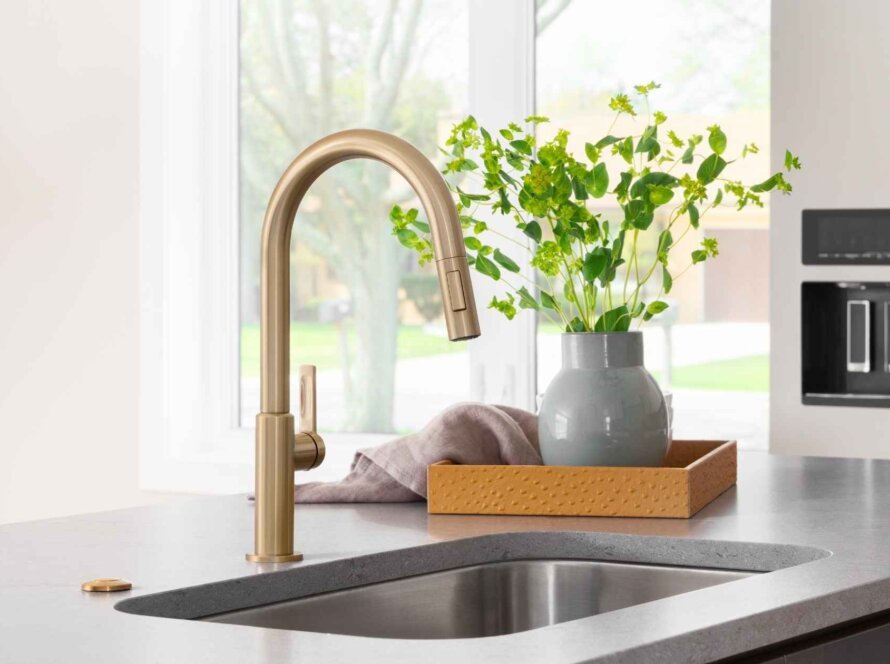
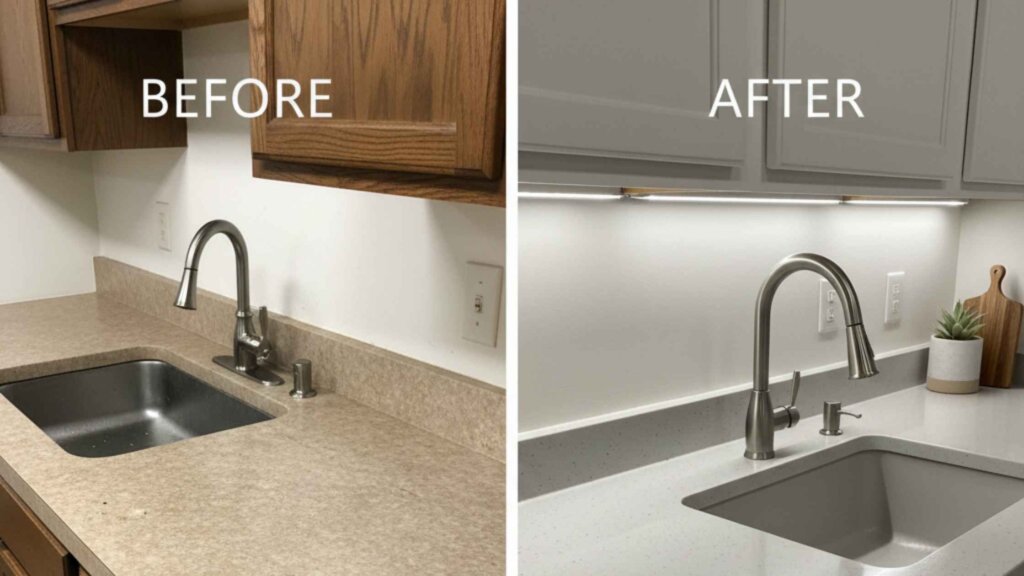
Are your kitchen countertops looking a little tired? Maybe they’re a color you never would have chosen, or they have a few scratches from years of use. A full replacement can be expensive and disruptive, but what if there was another way? Painting your countertops is an affordable and creative solution that can give your kitchen or bathroom a fresh, modern look in just a weekend.
This project is perfect for the savvy homeowner who wants a big impact on a small budget. With the right tools and a little patience, you can completely transform the look of your space. This article will guide you through the entire process, from picking your materials to applying the final protective coat. We’ll cover every step, share expert tips, and help you avoid common mistakes.
You will learn how to properly prepare your surfaces, which paints and sealers work best, and how to achieve a durable, professional-looking finish. Whether you want a simple solid color or a faux-marble effect, this guide has you covered.
Why Paint Your Countertops? The Benefits of Painting Instead of Replacing
Deciding between painting and replacing your countertops is a big decision. While new stone or quartz has its appeal, a DIY paint job offers several compelling advantages, especially for homeowners in Dallas and across Texas looking for a smart upgrade.
- It’s Incredibly Cost-Effective: This is the biggest draw for most people. A full countertop replacement can cost thousands of dollars. In contrast, you can paint your existing countertops for around $200. That includes all the primer, paint, sealer, and tools you’ll need. It’s a budget-friendly way to get a high-end look.
- You Have Complete Creative Control: When you paint, you are the designer. You can choose any color imaginable to perfectly match your cabinets or backsplash. You can even get creative with techniques to mimic the look of expensive materials like marble, granite, or concrete. The possibilities are endless.
- It’s a Fast Transformation: A countertop replacement can take weeks, from templating to fabrication and installation. Painting is a project you can complete in a single weekend. You could start on a Friday night and have a “new” kitchen by Monday morning.
- It’s an Eco-Friendly Choice: Tearing out old countertops means sending them to a landfill. By refinishing what you already have, you are reducing waste and making a more sustainable choice for your home and community.
Painting works best on laminate, solid surface, cultured marble, and even wood countertops. While it’s a fantastic DIY project, if the idea of tackling it yourself feels overwhelming, professional refinishing services are available. For homeowners in the Dallas area, America’s General Contractor offers expert countertop refinishing for a flawless, long-lasting finish without the DIY stress.
What Materials and Tools Do You Need? Essential Supplies for Painting Countertops
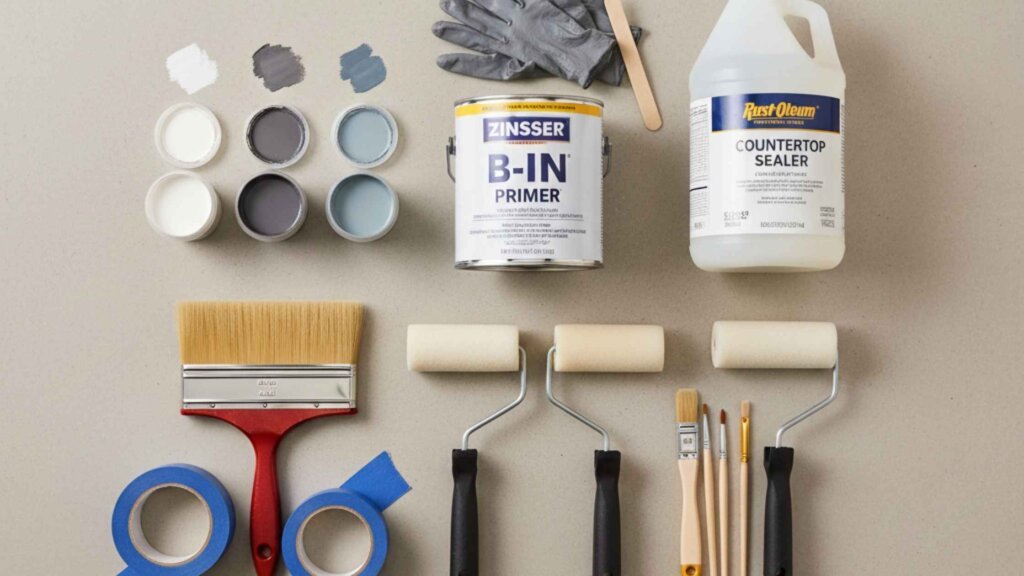
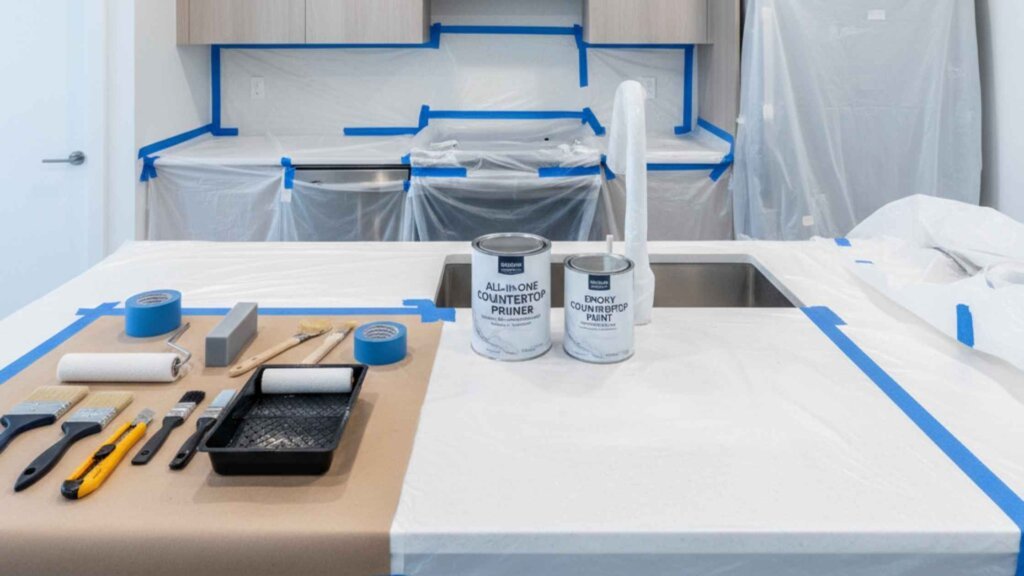
Heading to the hardware store without a list can be overwhelming. To make your project a success, you need to use products specifically designed for high-traffic, high-moisture areas like kitchens and bathrooms. Here is a checklist of what you will need.
Key Materials:
- Degreaser: A strong cleaning agent to remove all traces of oil, grease, and grime.
- Epoxy Filler: To repair any deep scratches, chips, or dings in your existing countertop.
- High-Adhesion Primer: This is non-negotiable. You need a high-quality, oil-based primer that will bond tightly to the slick surface of a countertop.
- Countertop Paint: Look for specialty countertop paint kits or a high-quality acrylic paint known for its durability. Do not use standard wall paint.
- Protective Sealer: A clear, food-safe epoxy or water-based polyurethane is essential for creating a durable, scratch-resistant, and non-porous final surface.
Essential Tools:
- Sandpaper: Both medium-grit (120-150) and fine-grit (220) will be necessary.
- Foam Rollers: A small, high-density foam roller will give you the smoothest, streak-free finish.
- Small Paintbrushes: For cutting in along edges and getting into tight corners.
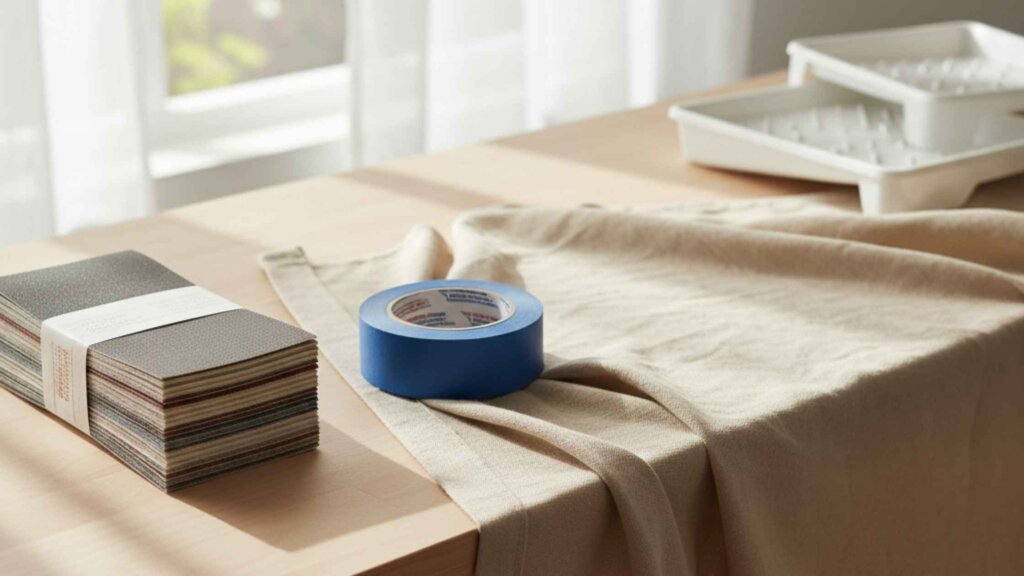
- Painter’s Tape: To protect your walls, cabinets, and sink.
- Drop Cloths or Plastic Sheeting: To protect your floors and appliances from drips and spills.
- Tack Cloth: To wipe away sanding dust before priming and painting.
- Safety Gear: Gloves, a respirator mask (especially for oil-based products), and safety glasses.
How to Prep Your Countertops for a Flawless Finish
Ask any professional painter, and they will tell you that a great paint job is 90% preparation. This is the most important part of the process. If you skip these steps, your paint will peel and chip in no time.
1. Clean, Clean, Clean:
Start by clearing everything off your counters. Using a strong degreasing cleaner, scrub the entire surface thoroughly. Kitchen grease and oils are invisible, but they will prevent the primer from sticking. After cleaning, wipe everything down with plain water to remove any chemical residue and let it dry completely.
2. Repair Any Damage:
Inspect your countertops for any chips, deep scratches, or dings. Mix up a small amount of two-part epoxy filler according to the package directions. Use a putty knife to press the filler into the damaged areas, slightly overfilling them. Let it cure completely, then sand it flush with the surrounding surface using medium-grit sandpaper.
3. Sand the Surface:
You need to get rid of the shiny, factory finish on your countertops. This is called “scuff sanding.” Using medium-grit sandpaper, lightly sand the entire surface. You are not trying to remove the color or pattern, just dulling the finish so the primer has something to grip onto. The surface should feel slightly rough and look dull when you are done.
4. Tape and Protect:
Use painter’s tape to create clean lines along your backsplash, cabinets, and sink. Press the tape down firmly to prevent any paint from bleeding underneath. Lay down drop cloths on the floor and cover any nearby appliances.
DIY Countertop Painting: A Step-by-Step Process
Now that the prep work is done, it’s time for the fun part. Work in a well-ventilated area and take your time. Rushing the process will only lead to mistakes.
Step 1: Apply the Primer
Using your high-adhesion, oil-based primer, start by using a small brush to “cut in” along the edges and around the sink. Then, use a high-density foam roller to apply a thin, even coat to the rest of the surface. Overlap your roller strokes to avoid lines. Let the primer dry completely according to the manufacturer’s instructions—this can take several hours.
Step 2: Paint the Countertop
Once the primer is fully cured, you can apply your base color. Just like with the primer, use a brush for the edges and a foam roller for the main surface. Apply thin coats. It is much better to apply two or three thin coats than one thick, goopy one. Let each coat dry for at least 4-6 hours, or as directed on the paint can. A light sanding with fine-grit sandpaper between coats can create an even smoother finish.
Step 3: Add Texture or Patterns (Optional)
If you want to create a faux-stone look, this is where you can get creative. Use a sea sponge to dab on different shades of paint for a granite effect. For a marble look, use a feather or a small artist’s brush to gently drag thin, wispy lines of gray or black paint across the surface. There are many online tutorials, like those from Designer Trapped, that show these techniques in detail.
Step 4: Seal the Surface for Durability
This is the final and most crucial step for protection. You must apply a clear, durable topcoat. A two-part epoxy sealer will give you the hardest, most durable finish, but it can be tricky to work with. A water-based polyurethane is more user-friendly. Apply the sealer with a clean roller, following the product directions carefully. You will likely need multiple coats.
Crucial Final Step: Let It Cure!
Your countertops may feel dry to the touch in a few hours, but they are not fully cured. Curing is the chemical process where the paint and sealer harden to their maximum durability. This can take anywhere from 3 to 7 days. During this time, be very gentle with your countertops. Avoid placing heavy objects, sliding appliances, or using harsh cleaners on them.
Expert Tips for a Long-Lasting and Beautiful Result
Want your countertops to look like they were done by a pro? Follow these tips.
- Good Ventilation is Key: Primer and sealers can have strong fumes. Open windows and use a fan to keep the air moving.
- Use Light Pressure: When rolling on paint or sealer, use light, even pressure. Pressing too hard can create bubbles and streaks.
- Patience is a Virtue: The biggest mistake people make is not waiting long enough between coats. If you paint over a layer that is still tacky, you can ruin the finish.
- Do a Test Run: Before you commit to a color or a faux-finish technique, practice on a piece of cardboard or a hidden spot on your counter.
If you follow all the steps but find yourself in over your head, don’t panic. A professional can often step in to fix mistakes or finish the job. For homeowners needing help with painting countertops in Dallas and Texas, America’s General Contractor offers consultations to get your project back on track.
Avoid These Pitfalls for a Successful DIY Project
DIY projects can be empowering, but they can also go wrong. Here are some common mistakes to avoid.
- Skipping the Sanding: If you paint directly onto a glossy surface, the paint has nothing to hold onto and will eventually peel off in sheets.
- Using the Wrong Products: Wall paint is not durable enough for a countertop. You must use specialty countertop paint or a high-quality acrylic enamel, along with a food-safe sealer.
- Applying Thick Coats: Thick coats of paint take longer to dry and are more likely to show drips, bubbles, and brush marks.
- Not Letting it Cure: Using your countertops too soon is the fastest way to ruin your hard work. Scratches and dings will happen easily before the sealer has fully hardened.
Your Questions About Painting Countertops Answered
Q: Can I paint any type of countertop?
A: Most types can be painted, including laminate, wood, solid surface, and cultured marble. It is not recommended for natural stone like granite or quartz, as it’s difficult for paint to adhere properly and it will devalue the material.
Q: How long does a painted countertop last?
A: With proper preparation and a high-quality sealer, a painted countertop can last for several years. The key is the protective topcoat.
Q: Is it food safe?
A: The paint itself may not be, but the final sealer is. Once your food-safe epoxy or polyurethane topcoat is fully cured, the surface is safe for food prep. However, it is always recommended to use a cutting board.
Q: How do I clean my newly painted countertops?
A: Use a mild, non-abrasive cleaner and a soft cloth. Avoid harsh chemicals or scrub brushes, as they can damage the sealer over time.
Conclusion
Painting your countertops is an incredibly rewarding project that can completely change the feel of your kitchen or bathroom for a fraction of the cost of replacement. It’s a testament to the power of a little paint and a lot of elbow grease. By carefully following the steps of cleaning, sanding, priming, painting, and sealing, you can achieve a beautiful and durable finish that you can be proud of.
Remember, the key to success lies in the preparation and your patience. Don’t rush the process, and give your new countertops plenty of time to cure.
If you love the idea of a countertop makeover but feel hesitant to tackle it yourself, you have options. For a guaranteed professional result without the time and effort, consider hiring an expert. If you are in the Dallas or greater Texas area, visit America’s General Contractor for expert countertop refinishing services. We can help you achieve the look you dream of.
<meta_data>
<meta_title>How to Paint Countertops: A Step-by-Step DIY Guide</meta_title>
<meta_description>Learn how to paint your countertops with this easy DIY guide. Get step-by-step instructions, tips, and material lists for a stunning kitchen makeover.</meta_description>
</meta_data>