Stepping out of a hot shower into a steamy, windowless box. Seeing a persistent dark spot of mold in the corner of your bathroom ceiling, no matter how much you scrub. Feeling like you’re getting ready for the day in a dim, enclosed space.
If you’re a Dallas-Fort Worth homeowner considering a renovation or building a new home, you’ve likely asked the question: do bathrooms need a window?
The short answer is no—a window is not strictly required by law if you have proper mechanical ventilation. But the complete, more valuable answer is that strategically including a window can transform your bathroom from a merely functional room into a healthy, serene, and valuable sanctuary for your Texas home.
This comprehensive guide will cut through the confusion. We’ll demystify Texas building codes, weigh the pros and cons specific to our North Texas climate, and explore stunning, practical design solutions that bring in light without sacrificing privacy. For those ready to transform their space, understanding these factors is the first step before consulting a professional service like bathroom remodeling in Dallas, TX.
The Legal Lowdown: Decoding Texas & Dallas Building Codes
Before dreaming of sunlit soaks, it’s crucial to understand the rules. The core principle in Texas building codes is not about windows per se, but about moisture control and air quality.
The Texas “Or” Clause: Window vs. Fan
The state’s residential code, based on the International Residential Code (IRC), provides a clear choice for bathroom ventilation:
- An operable window with at least 1.5 square feet of openable area, OR
- A mechanical exhaust fan that vents directly to the outside.
This means, legally, you can have a bathroom with no window if you have a properly installed, vented fan. Many interior or “powder room” bathrooms in DFW homes use this standard.
Local Enforcement and Common Sense
While the state provides the rule, local building inspectors are deeply concerned with practical outcomes—specifically, preventing mold. In the humid climate of Dallas, where summer humidity regularly soars, an exhaust fan is often viewed as the more reliable and consistent method for moisture removal. An open window depends on homeowner habit and weather conditions; a fan works with the flip of a switch.
The Non-Negotiable Safety Rule
If you do choose to install a window, one rule is absolute: Any glass within 60 inches (5 feet) of a bathtub, shower, or any other water source must be made of tempered or laminated safety glass. This is not a suggestion—it’s a critical safety requirement designed to prevent severe injury if the glass is broken. This applies to windows, shower doors, and glass partitions alike.
Beyond the Code: The Compelling Benefits of a Bathroom Window
Meeting code is the baseline. Choosing to include a window, however, delivers profound benefits that a fan alone cannot provide, elevating your home’s comfort, health, and value.
1. Superior Moisture and Mold Control
While a good exhaust fan is effective, natural ventilation through an open window can provide a faster, more complete air exchange. Throwing a window open after a shower rapidly evacuates steam, dropping humidity levels quickly. This is a powerful first line of defense against the mold and mildew that thrive in damp, stagnant conditions—a common challenge in our region.
2. The Transformative Power of Natural Light
This is where a window truly shines (pun intended). Natural light:
- Makes spaces feel larger and more open, a boon for smaller bathrooms.
- Improves mood and circadian rhythms, making your morning routine more energizing.
- Provides perfect, color-balanced light for grooming tasks like applying makeup or shaving.
- Reduces dependency on artificial lighting during the day, saving energy.
3. Enhanced Wellness and Home Value
A bright, airy bathroom feels like a personal retreat or spa. This isn’t just a feeling it translates directly to your home’s bottom line. Real estate professionals consistently note that bathrooms with natural light and fresh air are high on the list of desirable features for potential buyers, often commanding a perceived value premium.
Window Wisdom: Choosing the Right Type for Privacy, Light, and Style
The myth is that a bathroom window sacrifices privacy. The reality is that with smart design, you can have abundant light, fresh air, and complete seclusion.
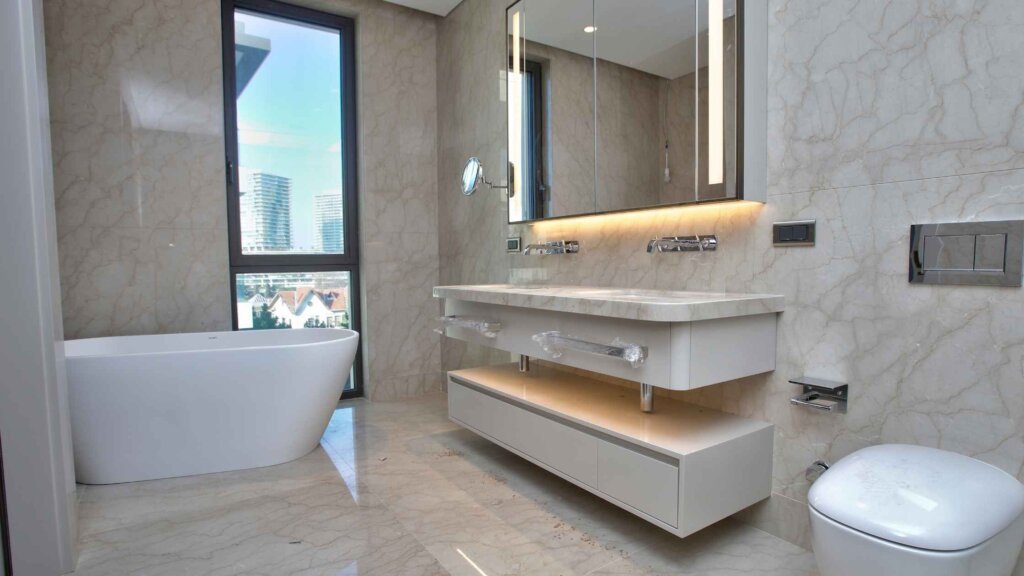
Top Window Styles for Dallas Bathrooms
- Awning or Hopper Windows: Hinged at the top (awning) or bottom (hopper), these are ideal for showers and high-placed installations. They can be left slightly open for ventilation even during a rainstorm, and their placement above eye level ensures privacy.
- Skylights & Solar Tubes (Tubular Daylighting Devices): The ultimate solution for interior bathrooms. A skylight over a shower creates a breathtaking, spa-like experience. For a more budget-friendly option, a solar tube pipes brilliant natural light into dark spaces using a highly reflective channel, with minimal structural intrusion.
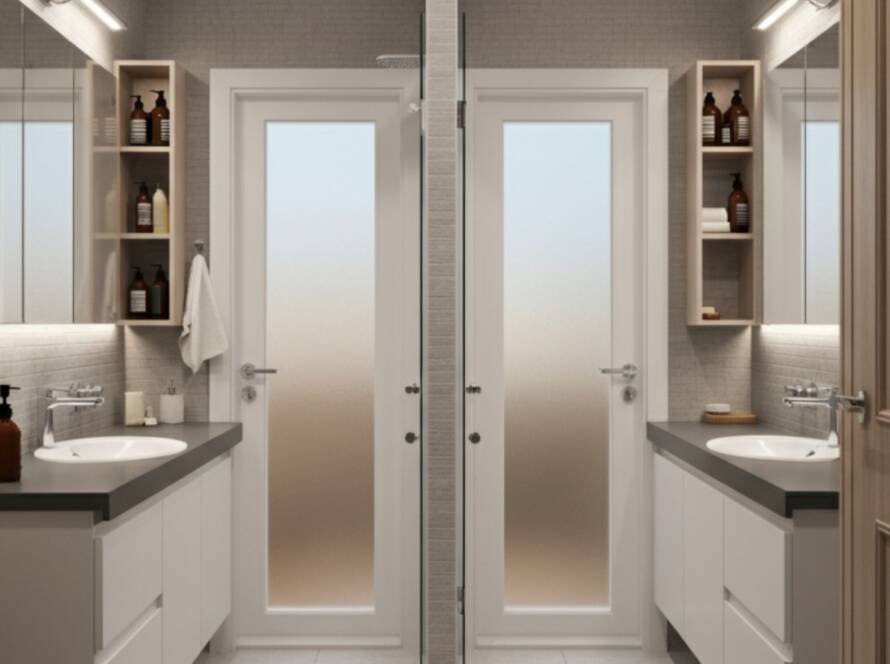
- Frosted, Obscured, or Textured Glass: This is the simplest path to privacy. You can choose from a variety of glass patterns that scatter light beautifully while obscuring clear views. Etched or patterned glass can even serve as a decorative element.
- Slimline Picture or Casement Windows: For walls facing a private yard or a non-issue direction, a larger picture window or operable casement window can frame a pleasant view and maximize light, creating a stunning focal point.
Design Integration for Your DFW Home
Consider your home’s architecture. A traditional brick Texas ranch might suit a double-hung window with frosted lower panes, while a modern addition in East Dallas could feature a floor-to-ceiling fixed window with side vents and textured glass.
The Professional’s Perspective: When to Consult a Dallas Remodeling Contractor
Understanding the “why” and “what” is the first step. The “how” is where professional expertise becomes invaluable, turning inspiration into a safe, code-compliant, and beautiful reality.
Navigating Complexity
Adding a window to an existing bathroom is not a simple DIY project. It involves:
- Structural Assessment: Determining if the wall is load-bearing and designing an appropriate header to support the new opening.
- Weatherproofing & Siding: Meticulously integrating the new window with your home’s exterior envelope—siding, brick, or stucco—to prevent water intrusion, which is a leading cause of building failure.
- Interior Finishing: Seamlessly blending the new interior trim with your bathroom’s aesthetics.
Systems Integration
A skilled contractor ensures all elements work in harmony. They’ll help you decide:
- Should the fan be retained as a supplement to the window?
- How does window placement affect lighting design and electrical plans?
- What is the best window material (vinyl, fiberglass, wood-clad) for our climate and your budget?
This is where the value of a trusted local partner is clear. A team like America’s General Contractor, which specializes in comprehensive bathroom remodeling in Dallas, can manage the entire process. From the initial assessment of your space to discussing your vision for light and privacy, they ensure the final result—whether it’s a dramatic skylight or a strategically placed awning window—is not only beautiful but also built to last, with proper permits and inspections handled every step of the way.
Practical Considerations & Frequently Asked Questions for Texas Homeowners
Let’s address the most common concerns head-on.
Q: Is it cheaper to just install an exhaust fan instead of a window?
A: Yes, the upfront cost of installing only a fan is typically lower. However, consider the long-term investment. The benefits of natural light—improved mood, potential energy savings on lighting, and increased home value—often outweigh the initial cost difference for many homeowners.
Q: My bathroom wall faces my neighbor’s house directly. Can I still have a window?
A: Absolutely. Privacy glass (frosted, textured) is your best friend. Alternatively, place an awning or hopper window high on the wall, above the sightline, to allow light and air in while maintaining complete visual privacy.
Q: Are there energy efficiency concerns with adding a bathroom window?
A: Modern windows are highly efficient. Look for dual-pane glass with a Low-E (low-emissivity) coating and argon gas fill. These features dramatically reduce heat transfer, keeping your bathroom comfortable and minimizing impact on your HVAC system. In our Texas climate, quality windows are a smart investment.
Q: What’s the very first step if I want to add a window to my bathroom?
A: Schedule a professional consultation. A reputable remodeler can assess the feasibility of your exterior wall, discuss placement options for optimal light and privacy, navigate local permit requirements, and provide you with a clear and detailed scope of work and estimate.
Conclusion: Let the Light In
So, do bathrooms need windows? Legally, no. But for a truly elevated home experience that embraces well-being, combats our local humidity, and adds lasting value, the answer shifts decisively toward yes.
A bathroom window is more than a pane of glass it’s a conduit for health, a beacon of natural light, and a design element that can define the entire character of the space. It turns a daily routine into a moment of respite.
If your dark, stuffy, or mold-prone bathroom is holding you back from this experience, let this guide be your starting point. Use it to inform your vision for a space that is bright, dry, and truly rejuvenating.
Ready to explore what’s possible in your Dallas home? The journey to a brighter bathroom begins with a conversation. Contact us for a professional consultation to discuss your goals, assess your space, and receive a tailored plan that brings light, air, and beauty into your daily life.