Whether you’re planning a home renovation, trying to buy the right amount of flooring, or just trying to figure out if that new sofa will fit, understanding square footage is essential. It’s a term you hear all the time in real estate and home improvement, but what does it really mean, and how do you calculate it? It might sound complicated, but it’s simpler than you think.
This guide will break down exactly how to determine the square footage of a 12×12 room. More importantly, we’ll explain why this number is so crucial for everything from budgeting for paint to arranging furniture. You’ll learn the straightforward formula, get practical tips for measuring accurately, and see how to apply this knowledge to your next home project.
What Does Square Footage Mean?
Before we start measuring, let’s clarify what square footage actually is. In simple terms, square footage is a measurement of area. Imagine covering a floor with one-foot by one-foot squares. The total number of squares it takes to cover the entire floor is the room’s square footage. It’s calculated by multiplying the length of a space by its width.
This unit is the standard one used in the building, real estate, and interior design businesses. . Knowing your room’s square footage is important for several reasons:
- Budgeting for Projects: Materials like carpet, tile, and hardwood are priced by the square foot. Knowing the exact size of your room helps you create an accurate budget and avoid overspending or running out of materials mid-project.
- Purchasing Materials: It allows you to buy the right amount of paint, flooring, or even wallpaper. This saves you from making multiple trips to the store and prevents wasteful leftovers.
- Communicating with Professionals: When you hire a contractor or designer, one of the first questions they will ask is about the dimensions of the space. Providing accurate square footage ensures you get a reliable quote and that everyone is on the same page.
- Real Estate Decisions: When looking at real estate ads, square footage is a very important number that helps people compare homes and figure out how much they are worth.
Ultimately, being able to calculate square footage empowers you as a homeowner. If you’re in the Dallas area and want to ensure perfect accuracy for a large-scale project, the team at America’s General Contractor offers professional measurement services to get you started on the right foot.
How to Calculate the Square Footage of a 12 x 12 Room
Now for the main event. Calculating the square footage of a simple square or rectangular room is incredibly easy. All you need is one basic formula.
The Simple Formula for Calculating Square Footage
The formula for area is:
Length × Width = Square Feet
For a room that is 12 feet long and 12 feet wide, the calculation looks like this:
- Length = 12 feet
- Width = 12 feet
- 12 feet × 12 feet = 144 square feet
So, a 12×12 room contains 144 square feet.
This same formula applies to any square or rectangular space. For example, a 10×15 foot room would be 150 square feet (10 × 15). This straightforward calculation is the foundation for almost any home improvement estimate. For more examples, you can explore resources like Carpet One’s guide to calculating square footage.
What if the room has an attached closet or nook? You simply measure that space separately and add its square footage to the main room’s total. For instance, if your 12×12 room has a 3×4 foot closet, you would add an extra 12 square feet (3 × 4), for a grand total of 156 square feet.
Practical Applications of Knowing Your Room’s Square Footage
Knowing that a 12×12 room is 144 square feet is useful, but how does this number translate into real-world projects? Let’s look at a few common scenarios.
Buying Flooring
This is perhaps the most common use for square footage. Whether you’re installing tile, carpet, or hardwood, you need to know how much to buy.
- Example: You want to install luxury vinyl plank flooring in your 144-square-foot room. Flooring is sold in boxes that list how many square feet they cover (e.g., 20 sq. ft. per box). To figure out how many boxes you need, you would divide your room’s total square footage by the coverage per box: 144 ÷ 20 = 7.2 boxes.
- Pro Tip: Always buy 10-15% extra material to account for cuts, mistakes, and potential future repairs. In this case, you would purchase 8 or even 9 boxes to be safe. You can use a flooring calculator like the one from California Floors to simplify this.
Painting a Room
While paint is sold by the gallon, square footage is still key. You need to calculate the area of the walls, not the floor.
- Example: In a 12×12 room with 8-foot-high ceilings, you have four walls. Two walls are 12×8 feet (96 sq. ft. each), and the other two are also 12×8 feet.
- Calculation: (96 sq. ft. × 4 walls) = 384 square feet of wall space.
- About 350 to 400 square feet are covered by a gallon of paint. That means you would need a little more than a gallon of paint for one coat. For a more accurate estimate, don’t forget to take out the space taken up by big windows and doors.
Furnishing and Layout
Square footage helps you plan your room’s layout and ensure furniture fits comfortably. A 144-square-foot room is a standard size for a bedroom or a small home office. Knowing this helps you visualize the scale. You can tape out the dimensions of a potential sofa or desk on the floor to see how much walking space you’ll have left.
Tips for Measuring a Room Accurately
The formula is simple, but your result is only as good as your measurements. Here’s how to ensure you get them right.
Step 1: Gather Your Tools
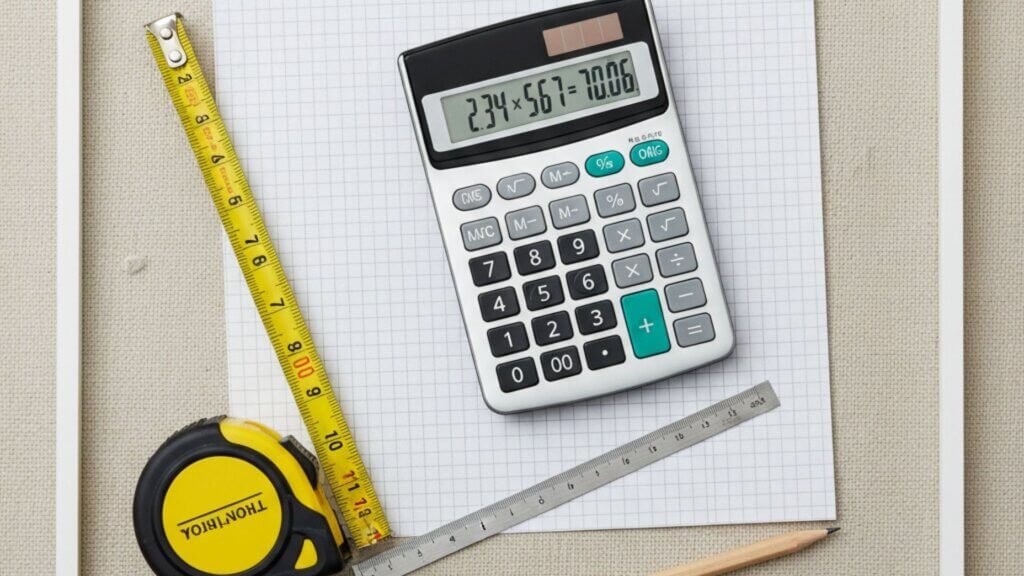
You don’t need much. Grab a reliable measuring tape (at least 25 feet long), a pencil and paper (graph paper is great for sketches), and a calculator.
Step 2: Measure the Length and Width
Find out how long the room is from one wall to the other. Then, do the same for the width. For best results, measure along the baseboard where the wall meets the floor and make sure your tape measure is straight and taut.
Step 3: Account for Irregular Shapes
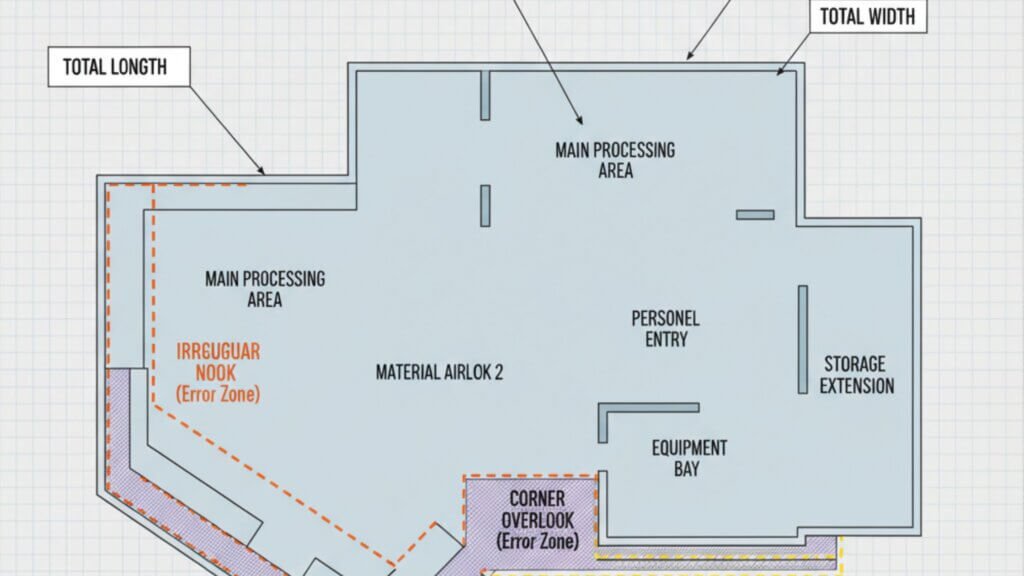
Not all rooms are perfect squares. If your room has an irregular shape, like an L-shape, or has nooks and alcoves, the best approach is to break it down into smaller, regular shapes (rectangles and squares).
- Draw a simple sketch of the room on your paper.
- Divide the sketch into separate rectangular sections.
- Measure the length and width of each section individually.
- Calculate the square footage for each section.
- Add all the totals together to get the grand total for the room.
For more complex layouts, a professional measurement can save you a lot of headaches. Guides like the one from Homestyler offer visuals for measuring tricky spaces.
Step 4: Double-Check Your Measurements
The old rule “measure twice, cut once” is crucial here. After you’ve written down your dimensions, take a moment to measure everything again. When buying supplies, even a small mistake can cost a lot of money.
How to Figure Out Square Footage Without Making These Common Mistakes
Getting an accurate calculation means avoiding a few common pitfalls. Watch out for these simple errors.
- Using the Wrong Units: Make sure all your measurements are in the same unit before you multiply. If you measure in inches, you’ll need to divide the final number by 144 to convert it to square feet. It’s usually easier to measure in feet from the start.
- Ignoring Irregularities: If you only measure the longest length and width of an L-shaped room, you will be calculating for a large rectangle that includes an area that isn’t part of the room. This will cause you to buy too much material. Always break down complex shapes.
- Rounding Too Early: Keep your measurements as precise as possible during calculations. For example, if a measurement is 12 feet 6 inches, use 12.5 feet in your calculation. Only round the final number when you are ready to purchase materials.
- Forgetting to Measure Twice: A simple slip of the tape measure or misreading a number can throw off your entire project. A quick second measurement is your best insurance against errors.
Not making these mistakes is important for a project to go well. If you’re undertaking a major renovation and need guaranteed accuracy, the team at America’s General Contractor can handle all the details for you.
Your Questions About Room Square Footage Answered
Here are a few quick answers to some common questions about room dimensions.
How many square feet is a 12×12 room?
A room that is 12 feet by 12 feet is 144 square feet. You get this number by multiplying the length (12 ft) by the width (12 ft).
How do I calculate square footage for a room with a closet?
Don’t measure the closet and the main room at the same time. Find out how much space each area takes up in square footage, then add the two numbers together to get the total area.
What if my room isn’t a perfect square?
If your room is an L-shape or has an alcove, break it down into smaller, separate rectangles. Calculate the area of each rectangle and add them all up to get your final square footage.
Can I use a laser measurer for this?
Absolutely! Laser measuring tools are a fantastic and highly accurate way to measure room dimensions, especially for longer distances or hard-to-reach areas.
Conclusion
Calculating the square footage of a 12×12 room is a simple and powerful skill for any homeowner. The answer is 144 square feet, but understanding the “why” behind the measurement is what truly matters. By multiplying a room’s length by its width, you unlock the ability to accurately budget for materials, plan your space, and communicate effectively with professionals. This fundamental knowledge is the starting point for countless successful home improvement projects.
Whether you’re tackling a small paint job or a full-scale renovation, accurate measurements are your best friend. They save you time, money, and stress.
Planning a project and want to ensure every detail is perfect?
If you need help with accurate measurements for a remodel in the Dallas area, visit America’s General Contractor. Our team of experts is ready to provide professional services to get your project started correctly and ensure a flawless result.